

Tom Woosnam has just created an excellent website on the Shakespeare authorship question and all the candidates. As I noted, it is a comprehensive, meticulous, intelligent, and honest effort. Naturally, I have a few disagreements—and there are a few errors when it comes to North. My next post will likely discuss the website, explaining why I think it is an A+ effort and so serious and effective. I will also add a few humble suggestions. Regardless, I think now is a good time to really post a collection of the proofs of North’s authorship:
Smoking Guns, Smoking Cannons, and Smoking Thermo-Nuclear Bombs
1) The playwright used Thomas North’s handwritten travel journal for Henry VIII and The Winter’s Tale (See video above)
As June Schlueter and I showed in Thomas North’s 1555 Travel Journal: From Italy to Shakespeare (Fairleigh Dickinson University Press, 2022), a young Thomas North took experiences of his embassy to Rome that he described in his handwritten, unpublished travel-journal and used them in early versions of Henry VIII and The Winter’s Tale. Decades later, Shakespeare would then adapt North’s plays.
The video above provides definitive proof not only that the playwright did use North’s journal—but that the playwright had to be North, not Shakespeare. Specifically, it shows why we may reject the last-grasp supposition that Shakespeare (or Fletcher, Shakespeare’s co-author of Henry VIII or some anti-Stratfordian candidate) may have gotten hold of North’s journal and crafted a play based on North’s experiences. For North not only recycled scenes from his journal in Henry VIII, he also took the same historical passages that he had used in his journal and reused them in Henry VIII.
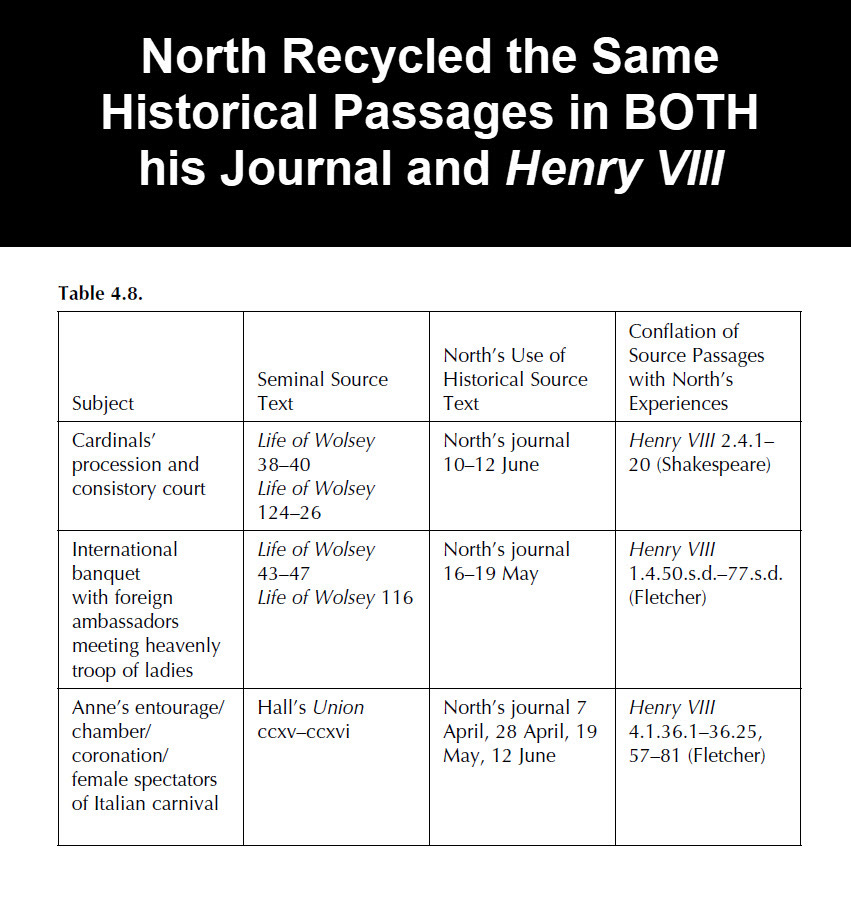
Why on Earth would North be studying and using these historical passages on Henry VIII for his journal? And how would it be possible for Shakespeare to miraculously choose to use these exact same passages that North used—even conflating the same widely separated ones just as North had—when writing Herny VIII? Quoting from Thomas North’s 1555 Travel Journal:
The result is that reading various entries throughout the journal gives the surreal impression that North, in 1555, somehow managed to experience the most spectacular events of Shakespeare and Fletcher’s Henry VIII.
Even assuming Shakespeare and Fletcher somehow got hold of the unpublished travelogue—and for some reason wanted to reproduce its visuals—we are stuck with the even more important question of “How?” How, without the use of digital technologies, would either have been able to determine what source passages the young journalist had used for his entries—some of which include a mix of widely separated elements—so that they could then make sure to conflate these same passages in their play? They couldn’t. It was North who had carefully studied these scenes in Cavendish’s Life of Wolsey and Hall’s Union. It was North who, when writing about the fall of Wolsey in the play, conflated the language and visuals of his own journal with the historical events he was staging. And it is North’s play, now lost, that is the missing link between his journal and the Henry VIII play that Shakespeare and Fletcher co-authored in 1613. (52–3)
2) Michael Blanding, North’s Workbook for 1590s plays, and North’s Outline to Cymbeline
This post here shows that North wrote out the plot outline to Cymbeline into a family history book, focusing on the characters, events, and passages that the playwright would use in Shakespeare’s Cymbeline:
FOUND: North’s Handwritten Outline of Shakespeare's 'Cymbeline'

This is another slam-dunk proof of North’s authorship of a Shakespeare play—and, importantly, it is based on evidence that is wholly independent of the other proofs of North’s authorship. So it would greatly help if you hit like, restacked, and shared it among friends. The discovery appeared in
Here’s a few pictures of those marginal notes:
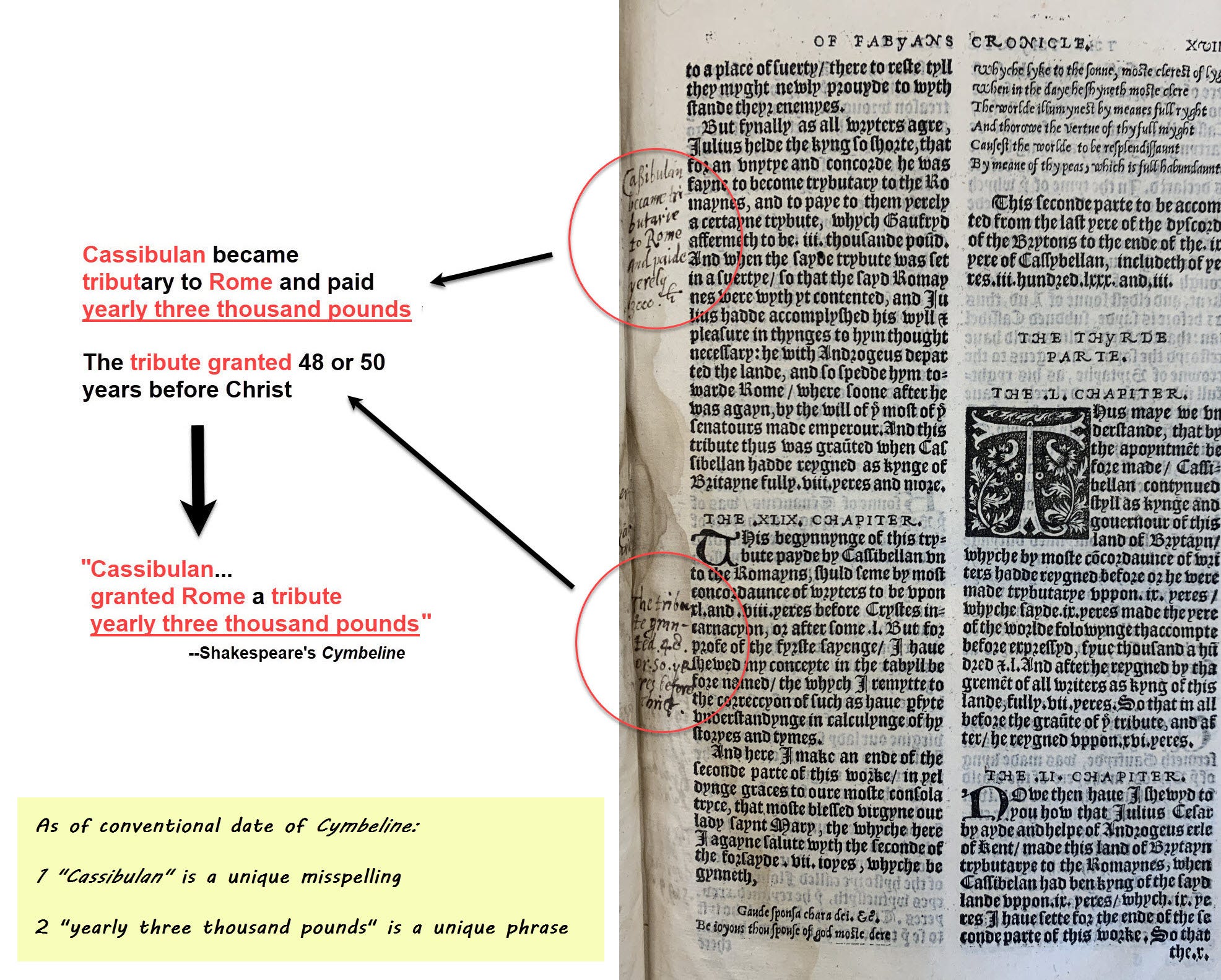
The precise quote regarding Cassibulan’s tribute to Rome (and North & Shakespeare share the same unique misspelling of Cassibellan):
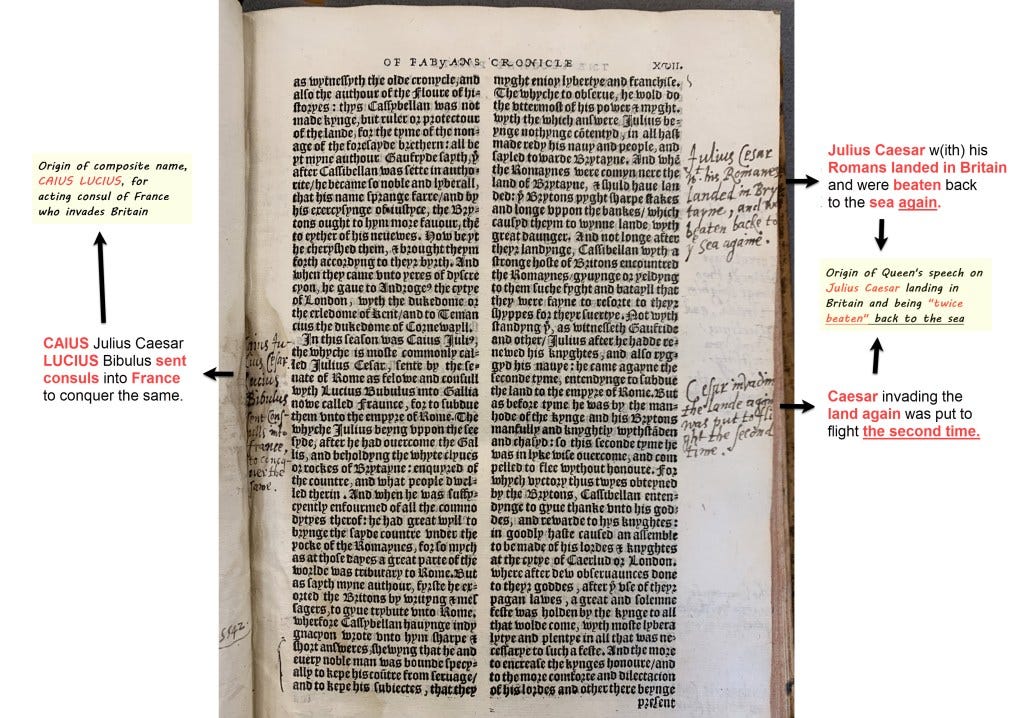
Caius Lucius as proconsul of France and general who invades Britain --and Julius Caesar being “twice beaten” back to the sea:
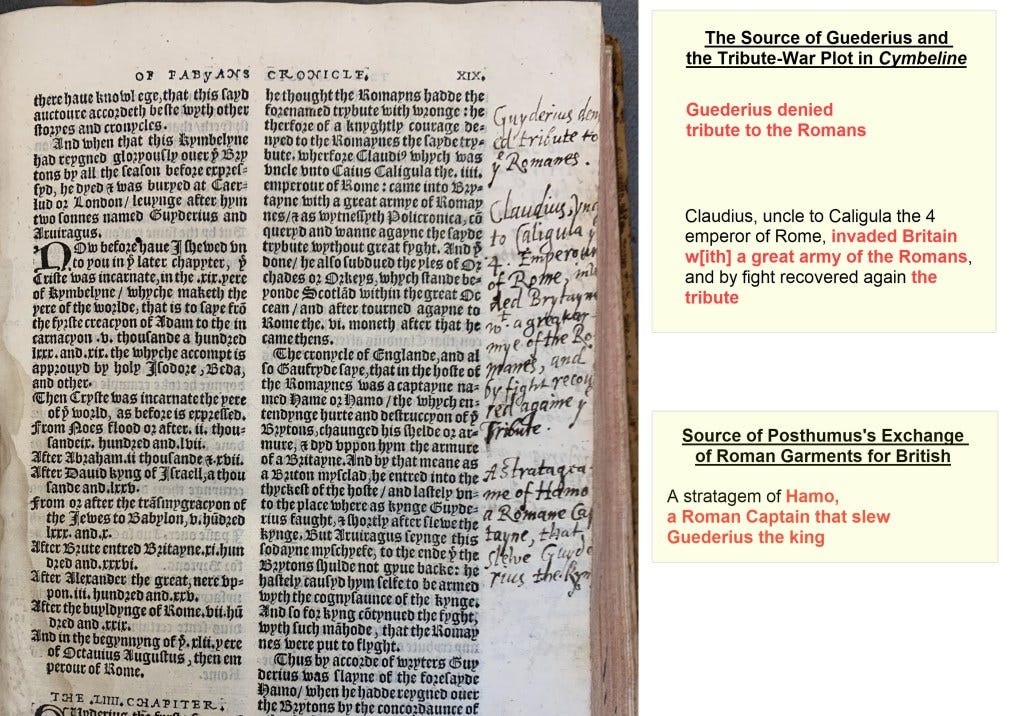
Major Characters and Events of Cymbeline Plot:
Here’s Michael Blanding in an article for Literary Hub on his discovery of the North family history book and how it turned him from skeptic to believer and collaborator.
By far the most significant book I found, however, was the calf-bound book I was examining at Harvard last October—a 1533 copy of Fabyan’s Chronicles. Written by Robert Fabyan, it is a compendium of English history that predates the more familiar Shakespearean sources of Holinshed and Hall. As I turned the pages, I found it full of Thomas North’s marginalia.
I turned excitedly to the reigns of the various Henrys and the Richards to see if North had noted anything included in Shakespeare’s history plays, but was disappointed to find that he had written little on any of those pages. In fact, he seems to have almost exclusively marked the early chapters of the book on Britain’s Roman-era history. I sent the images to McCarthy telling him that I didn’t think there was much here. He wrote me however to say: “It’s all Cymbeline.”
Now, I’d never read Shakespeare’s Cymbeline (and for good reason, as it’s not one of his better plays). The play is set in Britain during Roman times, as Rome is fighting with Britain over the question of paying tribute. Eventually Rome invades the island and is repulsed by a force led by King Cymbeline’s sons Arviragus and Guiderius. None of it is real history; rather, it’s a conflation of a number of historical events from the chronicles.
But McCarthy began excitedly showing me that nearly every one of North’s notes referred to characters and events from the play. In some cases, the language itself was even the same, as when North and Shakespeare both write that Britain paid to Rome “yearly three thousand pounds.” North even writes the name of a British king Cassibelan as “Cassibulan,” a misspelling found nowhere else but Shakespeare’s First Folio.
There are other common elements as well: Both reference a plot by one character to kill a rival by dressing up in his enemy’s clothes; both refer to a battle fought in Scotland by a wall of turfs more than 100 years later; and North even skips 200 pages to make a note about a deathbed vision by English king Edward the Confessor that also shows up in a dream sequence in Cymbeline.
If one thinks about this outline for more than a few seconds, the argument should be over. No, no one went to Thomas North’s library, grabbed one of his history books, found North’s marginal notes scattered around different pages, referencing different historical events and figures, and then decided to combine them all—and his quotes—into a play, even making the same mis-spellings.
3) George North Manuscript used for 11 Shakespeare plays
On top of this, Schlueter and I have also published our discovery of a 1576 manuscript on rebellions— A Brief Discourse of Rebellion & Rebels: A Newly Uncovered Manuscript Source For Shakespeare’s Plays, (British Library, 2018)—formerly kept at Thomas’s family library. George North, a likely cousin of Thomas, wrote the manuscript and made sure to compliment Thomas’s literary abilities in the foreword. Importantly, this handwritten work, with no known copies, was used as a source for eleven Shakespeare plays. News of the find made the front page of The New York Times, The (London) Times, The Telegraph, The Guardian, The Independent, The Daily Mail, The Los Angeles Times, U.S. News, Philadelphia Inquirer, and Slate.com, and generated still other press in France, Italy, Spain, Poland, Austria, Germany, Romania, India, Israel, China and elsewhere around the globe.
The late David Bevington, Professor Emeritus of the University of Chicago, editor of the Norton Anthology of Renaissance Drama, studied our work and wrote:
“New sources for Shakespeare do not turn up every day in the week. This is a truly significant one, that has not heretofore been studied or published. The list of passages in Shakespeare now traced back to this source is an impressive one… This is all a revelation to me, all the more remarkable in that this manuscript has been hidden and unexamined until now.” —David Bevington
But none of these discoveries was just blind luck. All of these findings came after Schlueter, Blanding, and I had collected proof upon proof that North was the original author of Shakespeare’s plays. Indeed, in 2014, long before we found any of these manuscripts and marginal notes, Schlueter and I had published evidence in Cambridge’s Shakespeare Survey indicating that Thomas North wrote the original version of Shakespeare’s Titus Andronicus.
We also knew that we had the most open-and-shut case in the history of forensic linguistics (as I will show below)—with hundreds of North’s lines and passages reused in nearly every Shakespeare play. Indeed, as will be shown, no one has borrowed more from an earlier writer than Shakespeare has from North. No one—not during Shakespeare’s time or since. And that is not hyperbole.
Moreover, Schlueter and I also knew that Thomas Nashe and Ben Jonson had repeatedly spoofed North as the author of Shakespeare’s plays. And in early January, 2026, Medieval and Renaissance Drama in England published June Schlueter’s and my article confirming that the satirists Thomas Nashe, Thomas Lodge, and Ben Jonson also identify North as the original author of Shakespeare’s plays—especially crediting him with Hamlet, Romeo and Juliet, Timon of Athens, Julius Caesar, and Much Ado About Nothing.
In other words, the entire reason we all started searching for North’s private library and any of his personal writings is that we knew that they would likely yield books and manuscripts of historical importance connecting North to Shakespeare’s plays. But we were still shocked at the dramatic ways this prediction has been repeatedly confirmed.
How We Know North Wrote the Plays
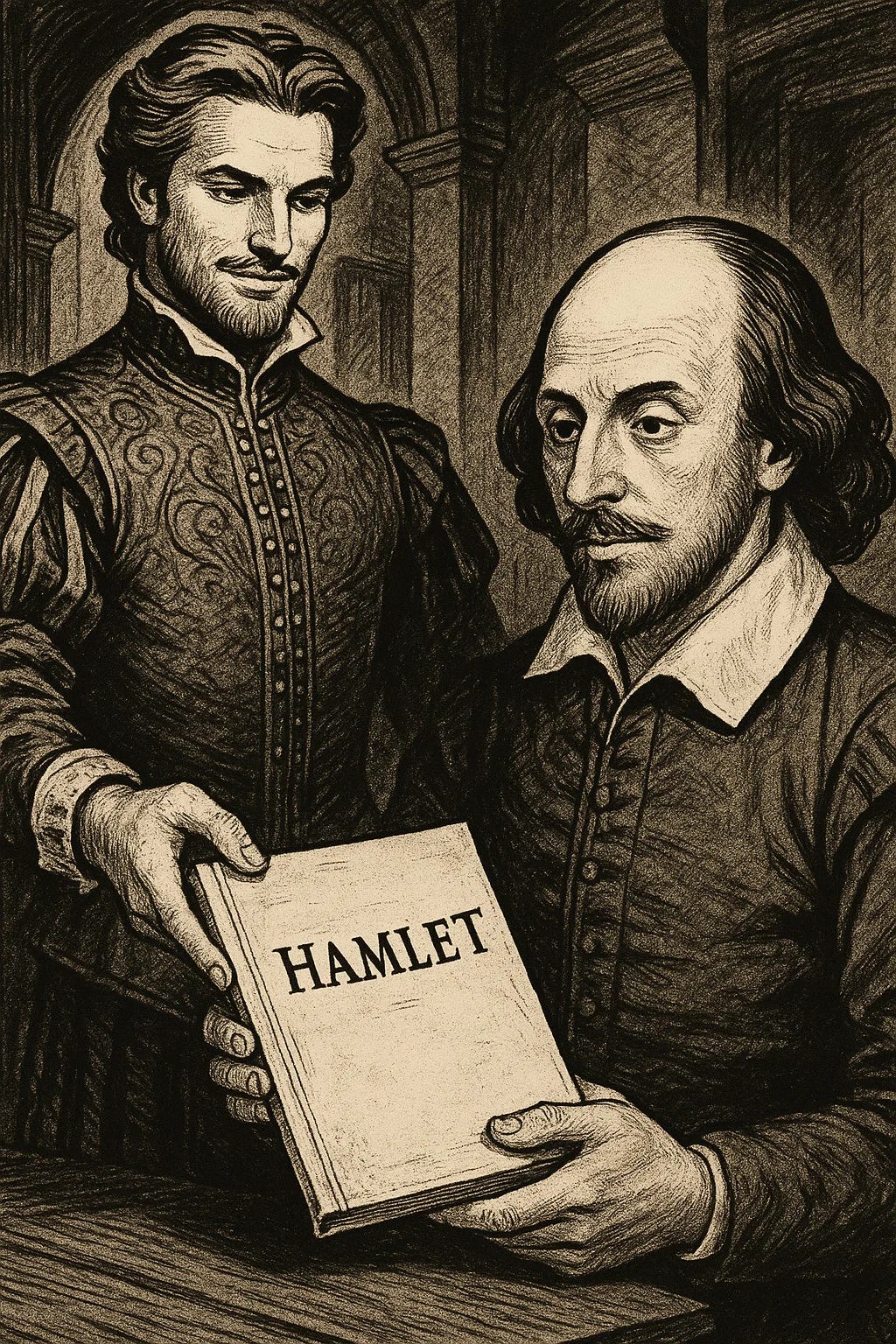
Shakespeare’s plays recycle thousands of lines and passages from North’s writings. When North wrote his plays, he frequently recalled and then recycled many of the stories, images, ideas, speeches, and characters from both his published and unpublished writings. Sometimes, as with the Roman plays, North worked with his own Plutarch open beside him, borrowing from his old writing frequently verbatim. Other times, with other translations, it seems he reread the important parts of the story or philosophical treatise that he wanted to incorporate in his plays before he started writing the corresponding sections in the plays. Mostly, he likely just worked from memory, paraphrasing a passage or scene he had written about before. In every case, he would repeat many of the same words, phrases, and lines he had used earlier. And many of these recycled passages still remain in Shakespeare’s adaptations.
The result is that literally thousands of lines and passages in the Shakespeare canon can be traced back to North’s prose texts. These borrowed passages derive from everything North ever wrote and involve nearly every act of every play — not just the Roman tragedies. And many of the links between the passages cannot be disputed as they include identical lines that no one else in the history of English has used — not at the time and not since. Quite simply, as this video shows, no one has borrowed more from an earlier writer than Shakespeare has from North, and it is not even close.
Consider the following taken from Thomas North: The Original Author of Shakespeare’s Plays (shared words are in red; and North’s texts predate Shakespeare’s plays by decades):
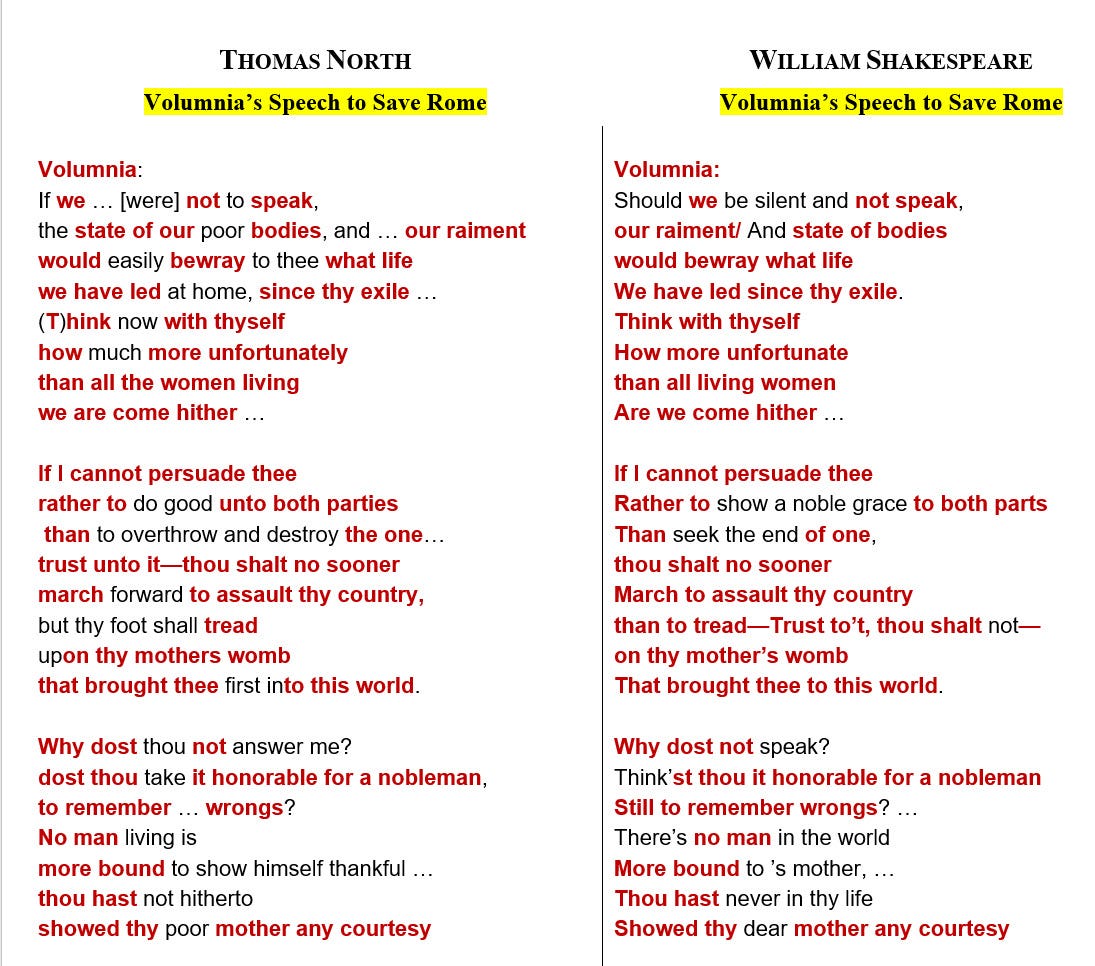
Now, to be clear: Loads of Shakespeare enthusiasts, both scholars and lay people, will act like this is normal. But, of course, it isn’t. Consider this passage, which is another speech from the same play:
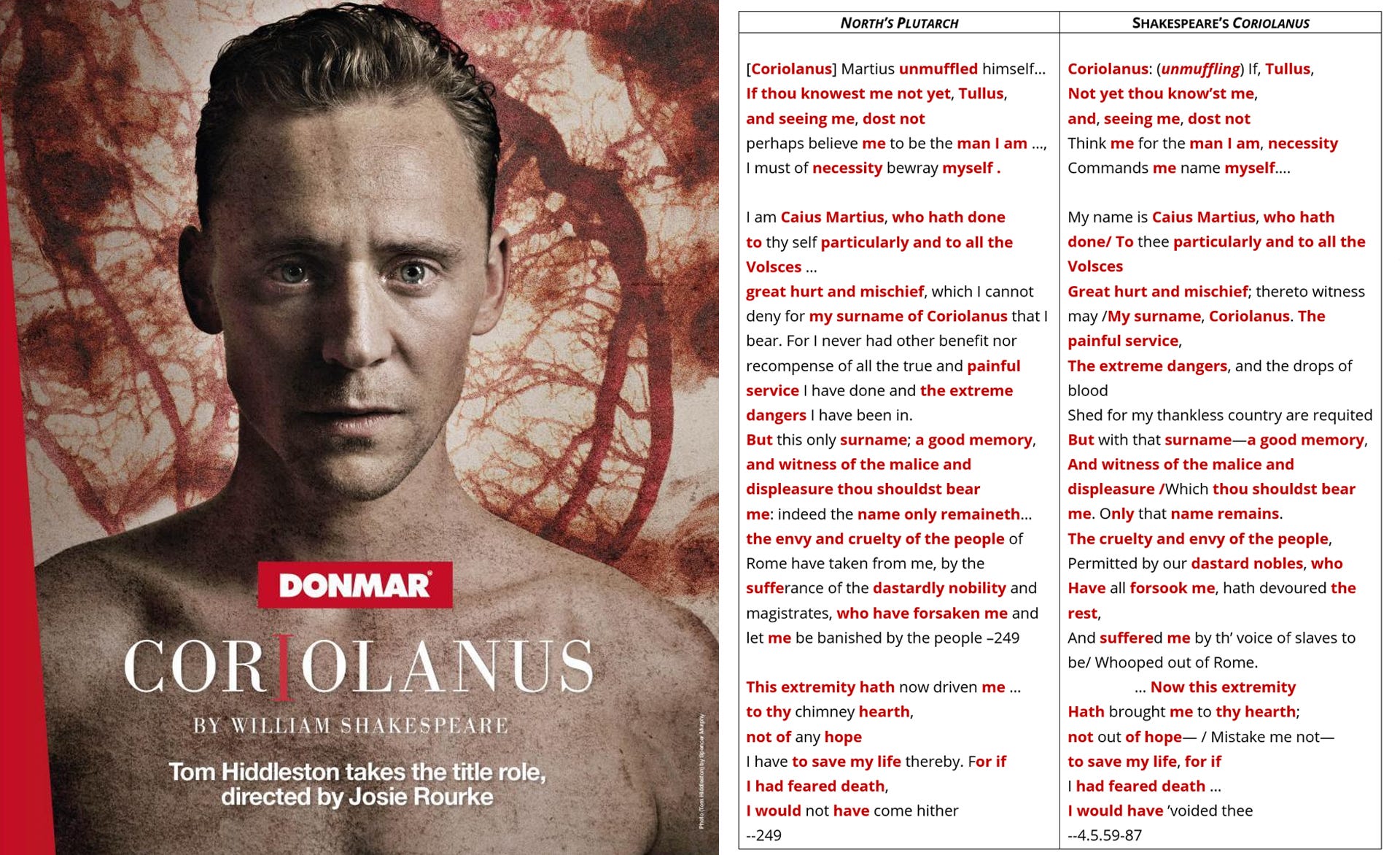
No, this is not just a normal example of “emulation.” And no, this was not common among other writers at the time. Here is another example:
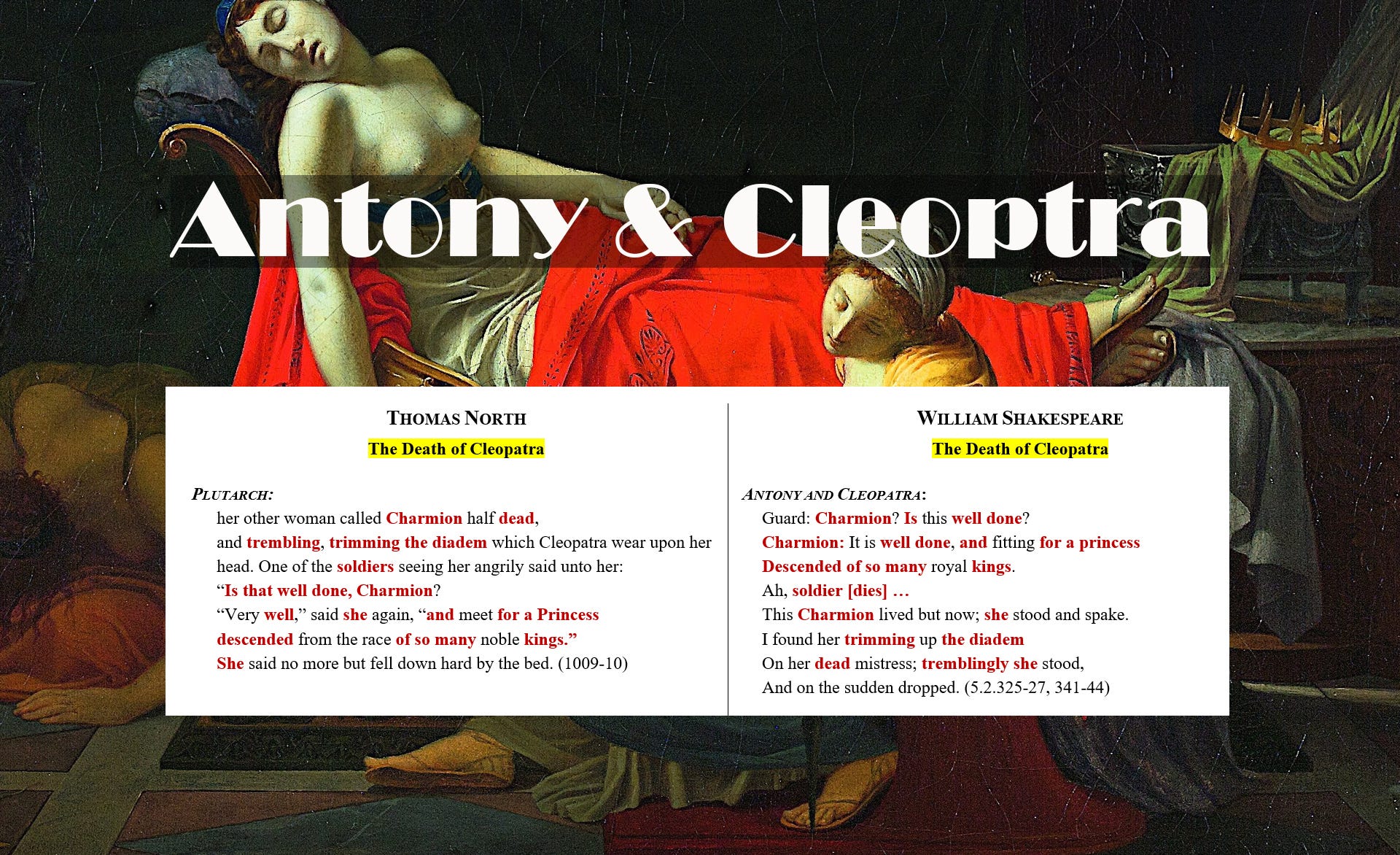
Here is another example:
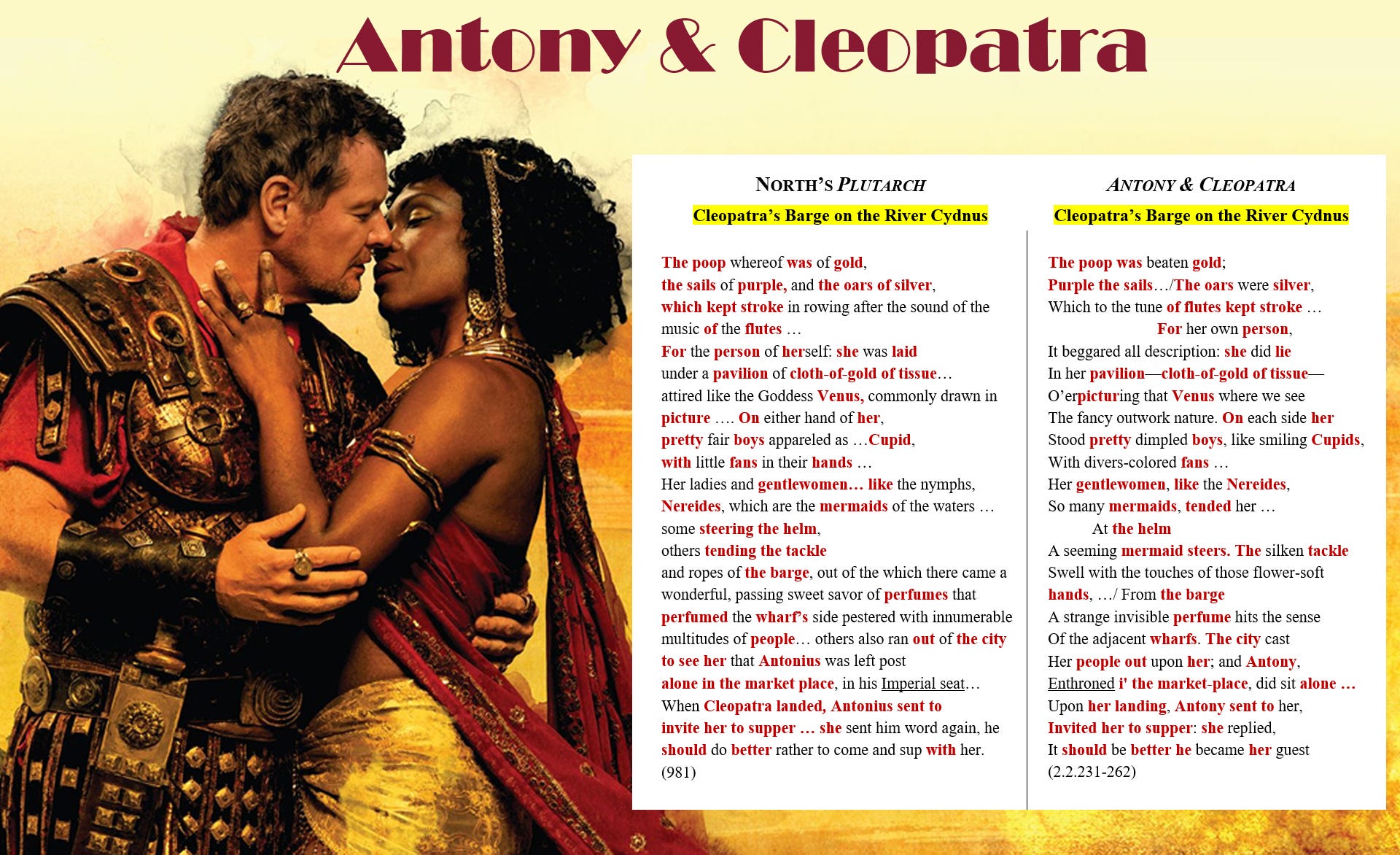
For those who do think this is normal, can you cite four borrowed, uncited passages like this (all taken from the same writer) in the texts of some other well-known writer of the era—Christopher Marlowe, John Fletcher, Francis Beaumont, Thomas Middleton, etc.—or in the texts of any other well-known writer ever? If you can, then cite the authors and the passages in the comments section.
And as you look for an example of four such passages (which you won’t be able to find), here’s eighty more passages that Shakespeare borrowed from North:
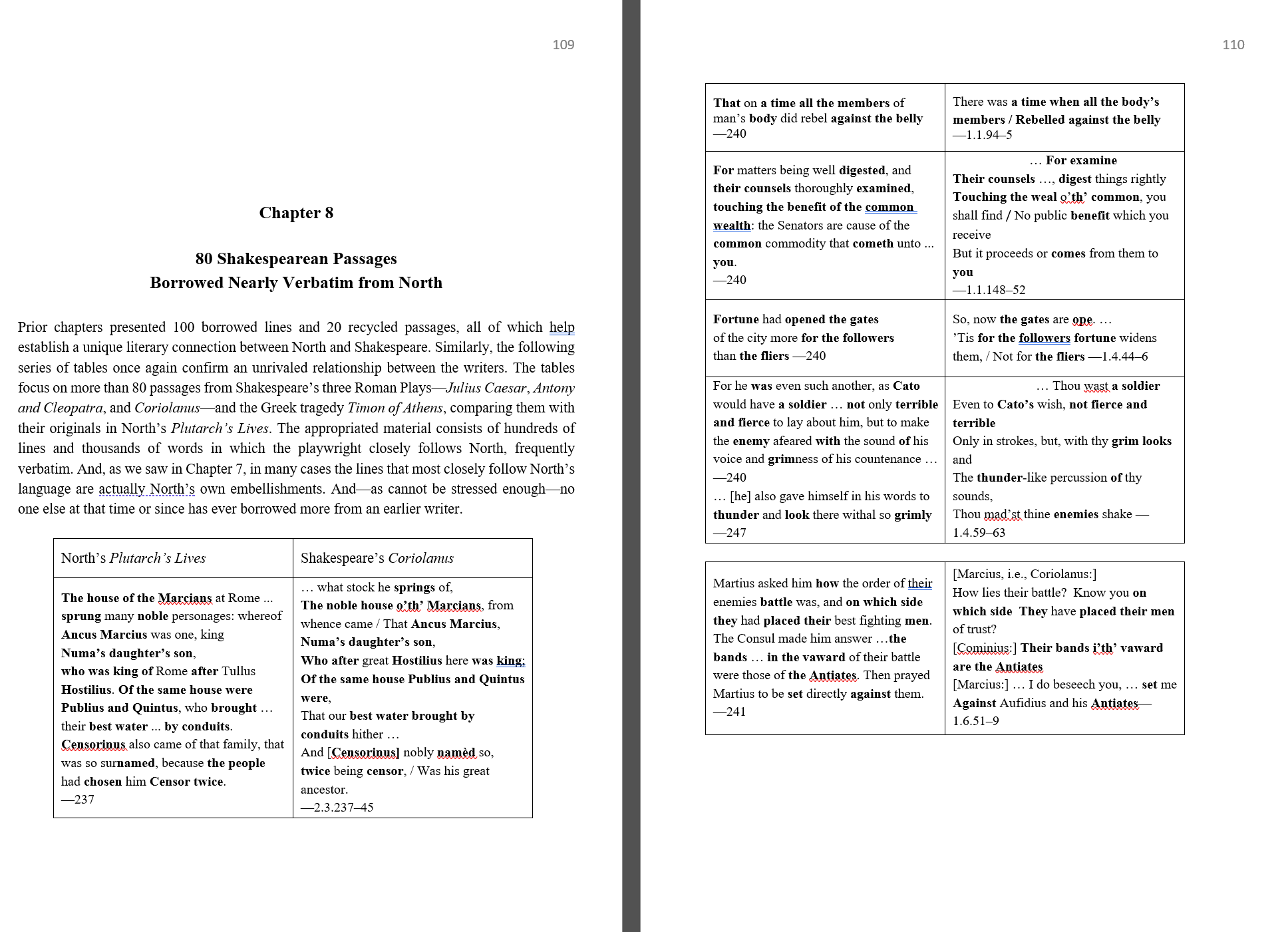
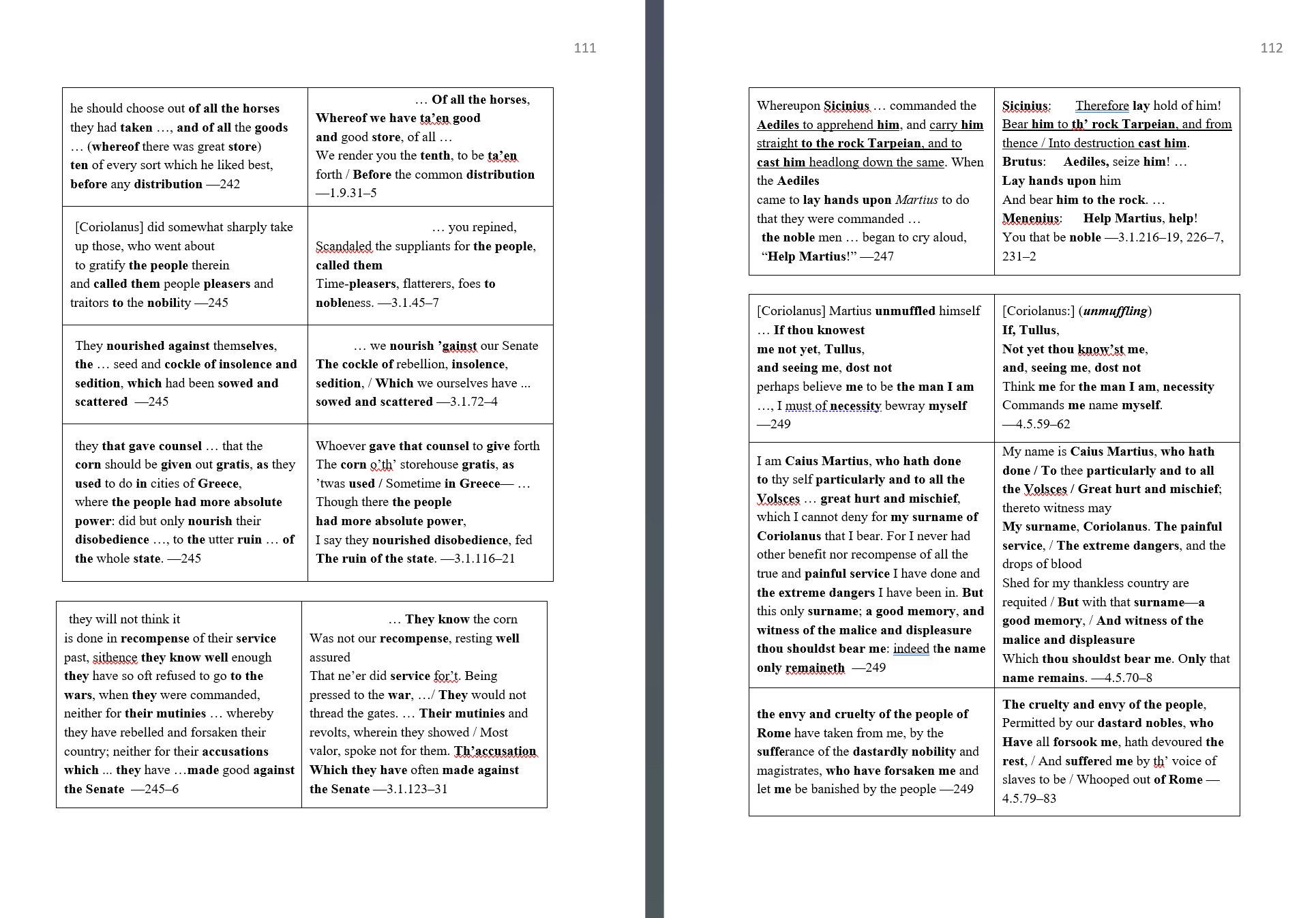
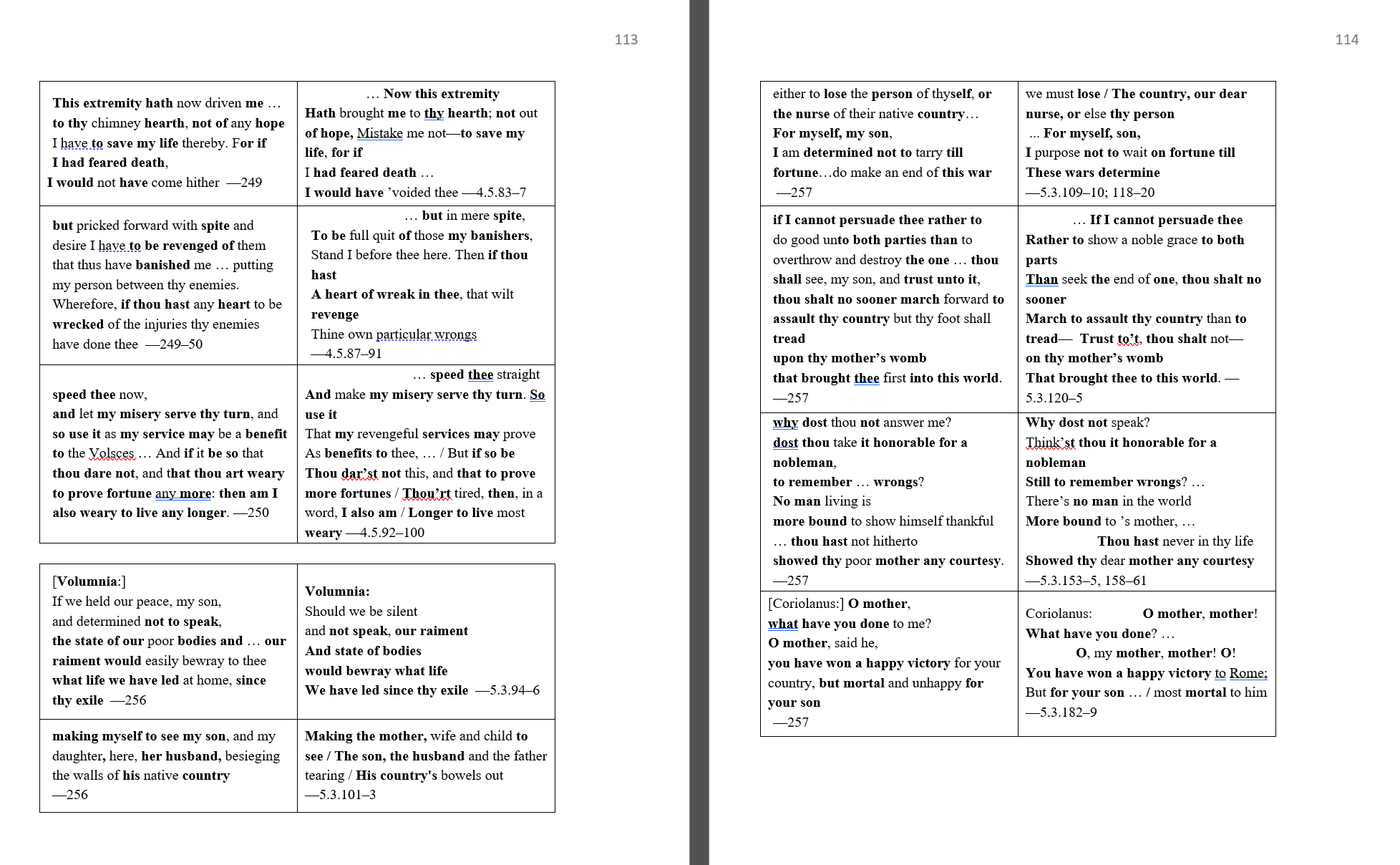
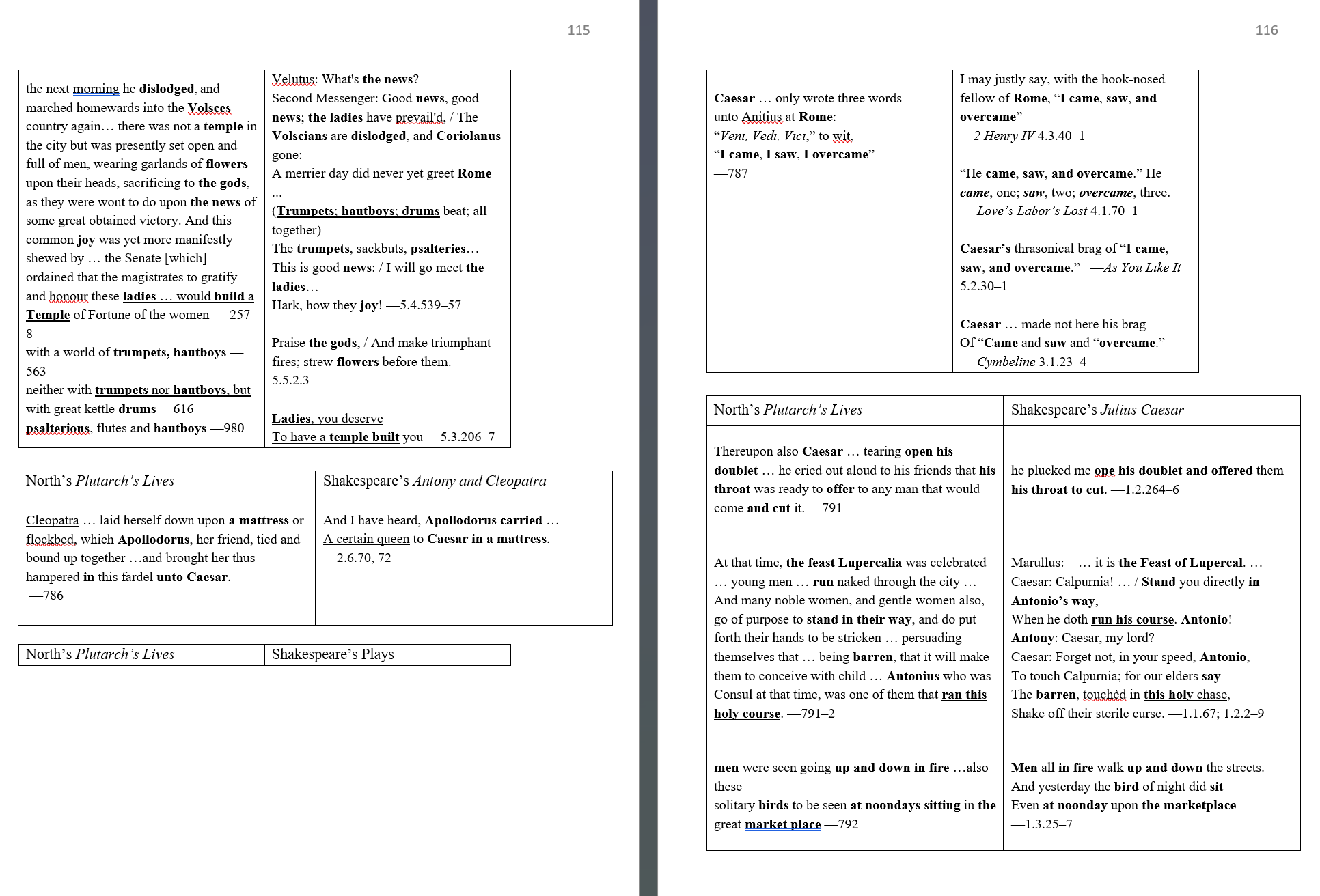
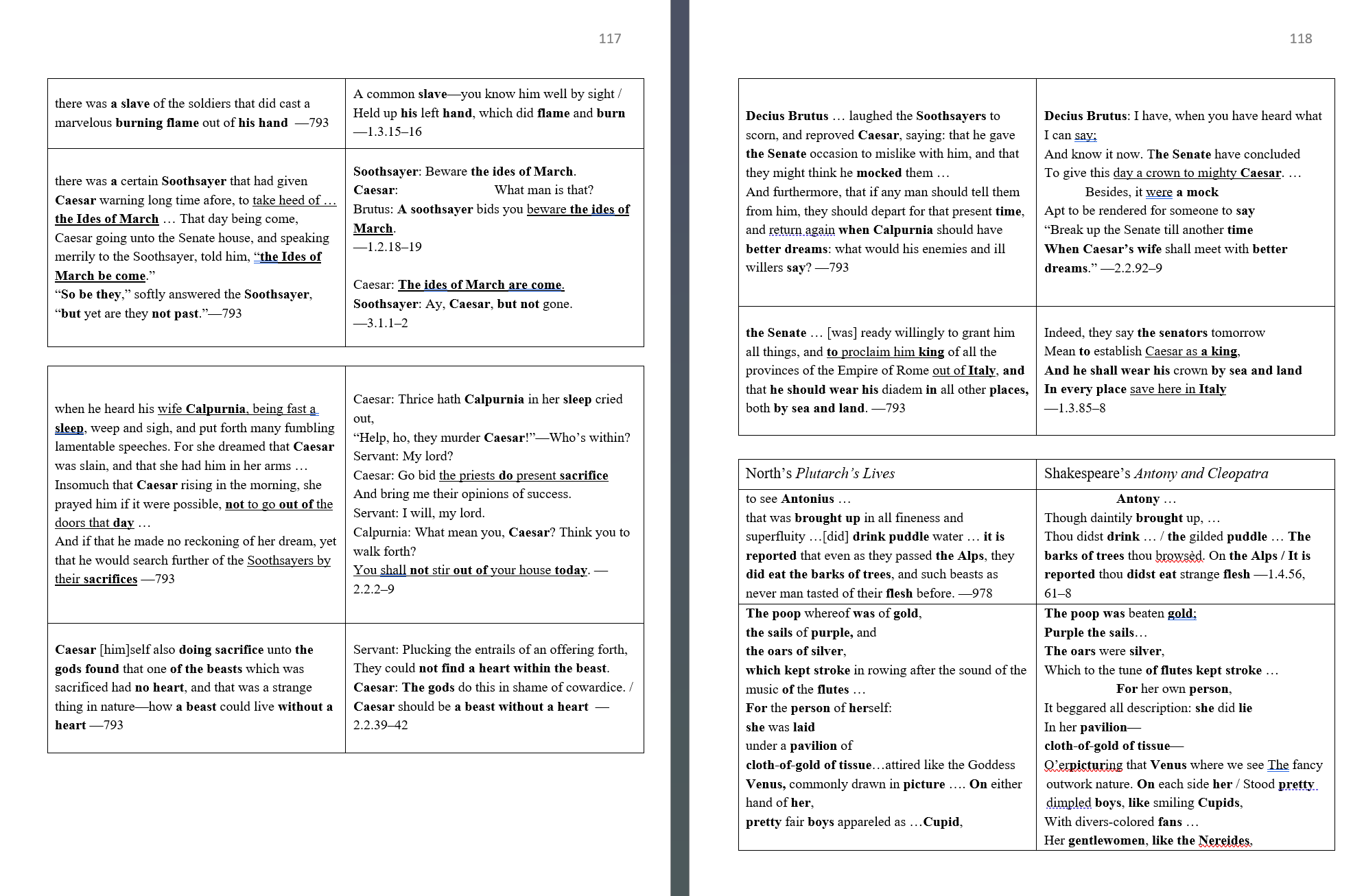
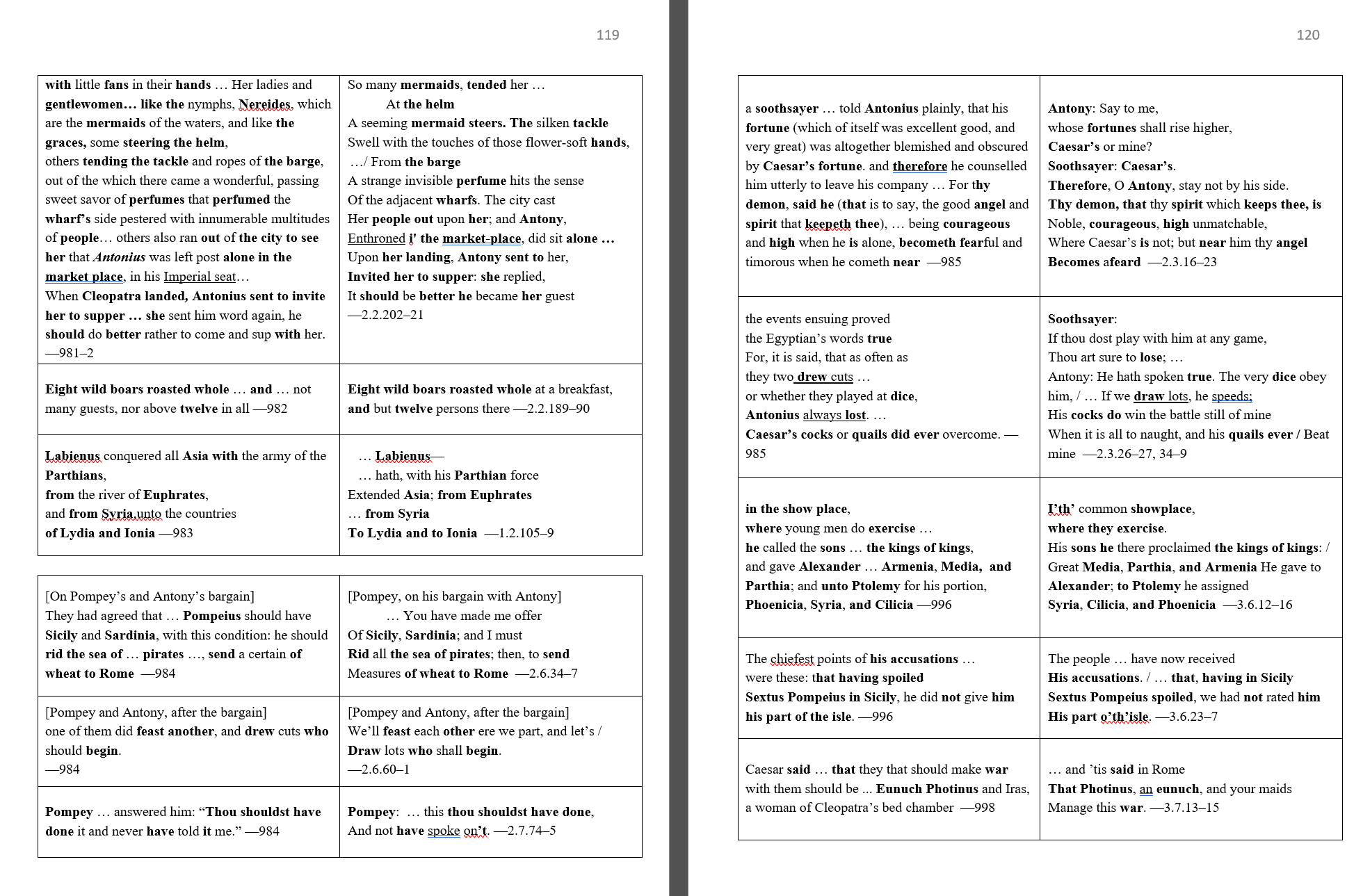
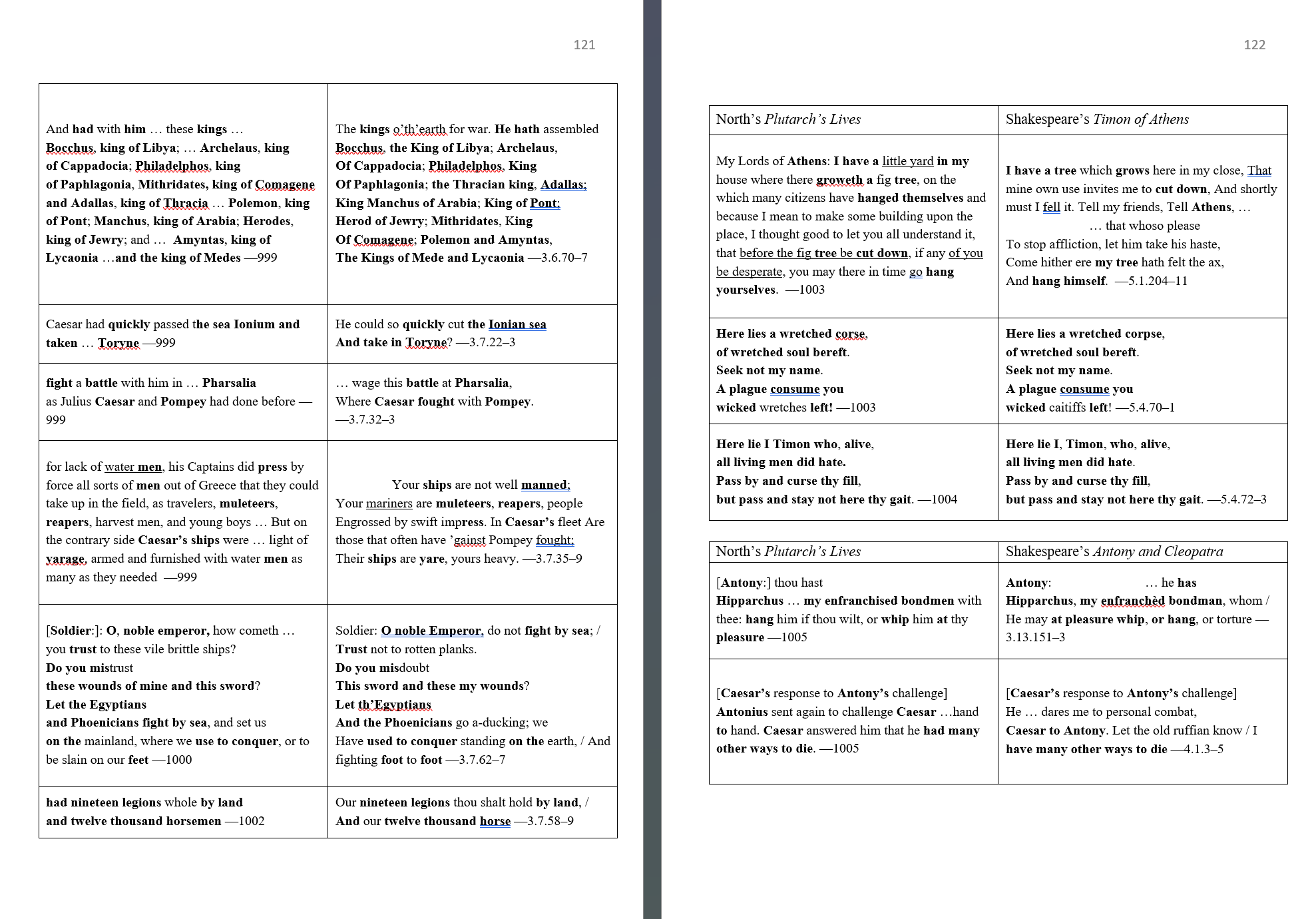
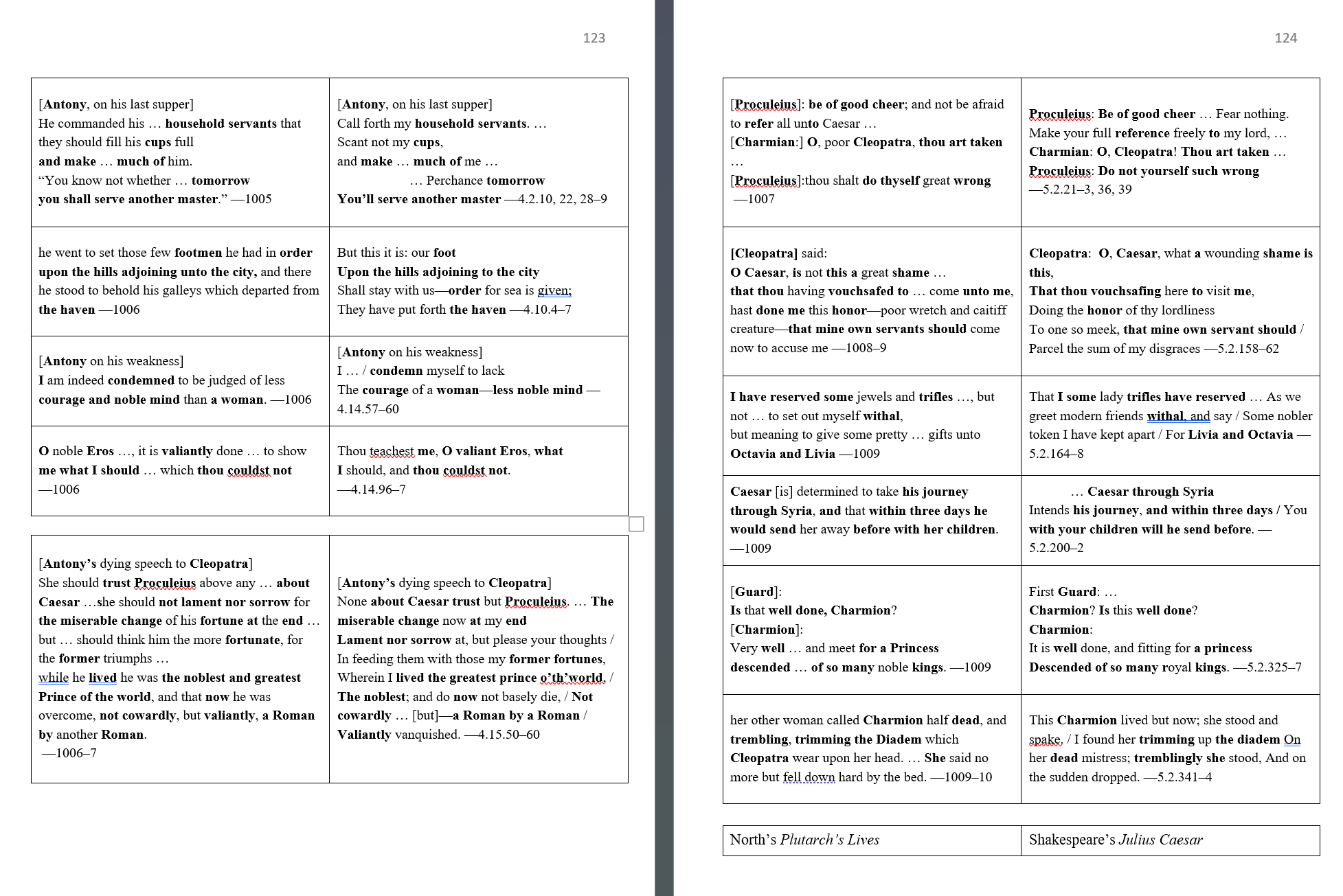
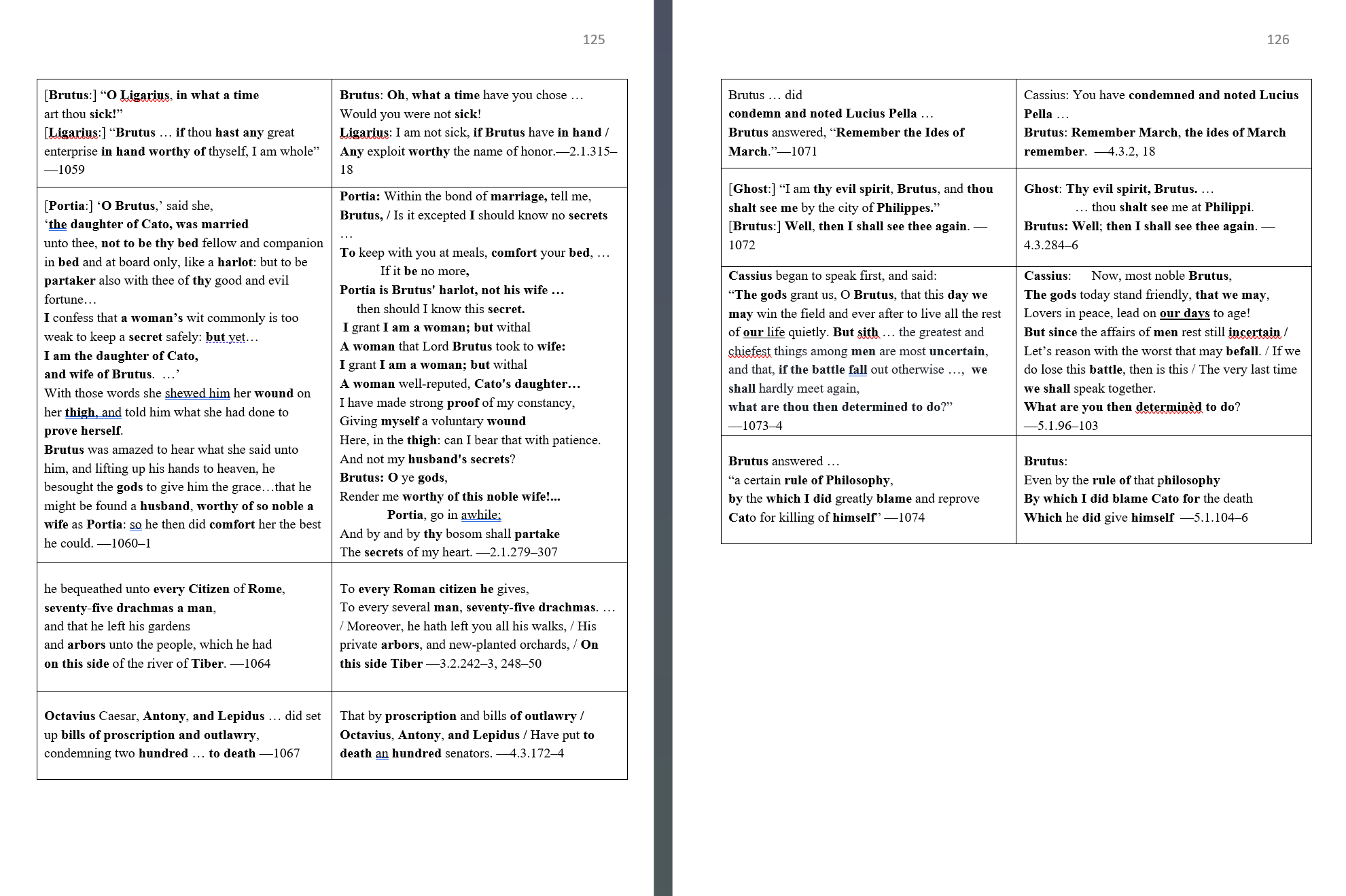
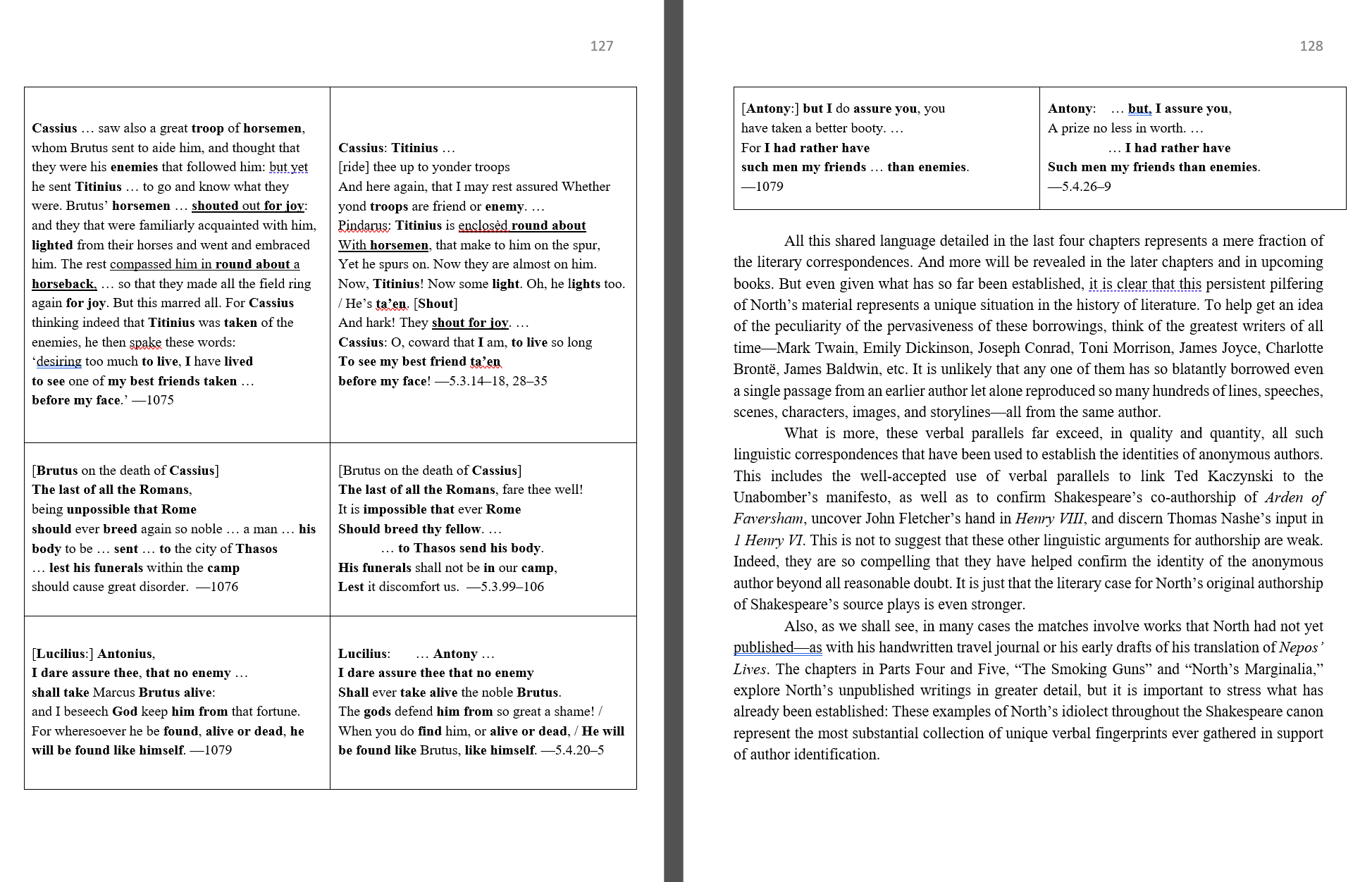
This is, of course, not normal, though many pretend it is.
Okay, forget the narrowing of possible comparisons of Shakespeare to all other well-known writers. Let us just consider the universe of all other writers ever—including the greatest and most obsessive plagiarists in history. Now, where do you think the extent of Shakespeare’s borrowings from North fall within this universe? It doesn’t.
Shakespeare has borrowed more from North than any other author has from another writer—and it’s not even close. The North / Shakespeare relationship is unique in the history of literature, and anyone who suggests otherwise is wrong and will not be able to produce comparable examples.
But what follows is even more important:
A More Significant Literary Connection Between North and Shakespeare
Relevantly, North and Shakespeare also share hundreds of unique and distinctive lines that the playwright clearly recalled—rather than copied from a text. This is similar to the evidence that helped identify Ted Kaczynski as the Unabomber—one of the most famous cases in the history of forensic linguistics.
In September 1995, The Washington Post published a 35,000-word manifesto written by the Unabomber. This was the name that the media had assigned to the notorious technophobic terrorist who had been targeting people across the United States, mostly with mail bombs, for 17 years. In April of the following year, the FBI obtained a search warrant and raided the desolate and dilapidated Montana cabin of Ted Kaczynski, a former math professor. In the interim, FBI profiler James Fitzgerald had managed to connect the anonymous manifesto with many of Ted Kaczynski’s prior writings, and, in so doing, he helped establish forensic linguistics as an effective new tool in American law enforcement.
The question Fitzgerald faced was whether an author of an anonymous text could be identified by comparing his text with a candidate-author’s known writings. Do writers have linguistic fingerprints? Will they at times echo their own prior writings in a distinctive and telling fashion? And when were passages or lines from two different works so similar that their resemblances could not be attributed to chance?
Kaczynski’s writings first came to the attention of the FBI through his younger brother, David, and David’s wife, Linda Patrik. Linda noticed that the Unabomber’s published manifesto read much like the anti-technology letters that her brother-in-law Ted had sent her husband. She convinced David to read the article, and David agreed that the terrorist did not just share the same outlook as his paranoid sibling; he sounded like him too. The essay included peculiar phrases like “cool-headed logician” that David had only ever heard his brother say.
David supplied one of Ted Kaczynski’s letters to the FBI, a 23-page document written in the 1970s. Terry Turchie, head of the Unabomber task force, then sent the letter to Fitzgerald, providing no background information other than its date of origin. Turchie simply asked the profiler to assess the letter. Fitzgerald immediately noticed numerous similarities to the manifesto, both in the ideas and the language. Fitzgerald soon called back telling Turchie that if the letter was not a hoax, “you’ve got your man.”
Soon Fitzgerald had access to other letters of Ted Kaczynski, supplied both by David Kaczynski and Ted’s mother, Wanda. Fitzgerald listed all the similarities between the known writings of Ted and the manifesto, and it was clear to him that they exposed the identity of the terrorist:
Kaczynski: propaganda and image-making techniques
Unabomber: propaganda and other psychological techniques
Kaczynski: computers with superhuman intellectual capacities
Unabomber: super-intelligent computers
Kaczynski: the modern obsession with physical security and longevity
Unabomber: modern man’s obsession with longevity
Kaczynski: It is commonly assumed that scientists are motivated mainly by a desire to benefit humanity.
Unabomber: Some scientists claim that they are motivated by “curiosity” or by a desire to “benefit humanity.”
The following parallel especially caught the attention of Fitzgerald, and he considered it a “smoking gun”:
Kaczynski: We will be sacrificing some of the materialistic benefits of technology, but there just isn’t any other way. We can’t eat your cake and have it too.
Unabomber: As for the negative consequences of eliminating industrial society—well, you can’t eat your cake and have it too. To gain one thing you have to sacrifice another.2
As Fitzgerald stressed, that word-string in bold was not a typical rendering of that proverb. Most people say, “you can’t have your cake and eat it too,” placing have before eat. But even more significantly, both Kaczynski and the Unabomber recited this peculiar take on that proverb in the same unusual context and while making the same distinctive point. Not only did both Kaczynski and the Unabomber favor the elimination of technology; they also admitted that this would have a downside. Still, each noted, this sacrifice (or sacrificing) must be made as you can’t eat your cake and have it too. A judge agreed on the compelling nature of this linguistic evidence and granted a warrant to search Kaczynski’s Montana cabin home.
In early 1996, at about the same time that Fitzgerald was building his forensic linguistic case against Kaczynski, Don Foster was studying the language of Primary Colors by “Anonymous.” Primary Colors was a roman-à-clef—a supposedly fictional narrative about a southern governor that was a thinly disguised tell-all about Bill Clinton’s 1992 primary campaign. Using similar techniques, Foster correctly identified Joe Klein as the author.
Since then, forensic linguistics has grown into a full-fledged science, developing myriad techniques to help link anonymous texts to certain suspects. Typically, criminals are not prolific writers, so experts in the field have had to create methods that might squeeze telling information out of subtler clues. But when experts have access to a significant amount of writing material from both the criminal and a possible suspect, they can search for distinctive or, hopefully, even unique phrasing shared between two relevant texts. The discovery of a shared line that is literally unique—i.e., that no one else has ever used except the criminal and the suspect—would almost seem too much to hope for. But when such finds are made, they are remarkably informative.
Consider the following Kaczynski-Unabomber parallel:
Kaczynski: It is commonly assumed that scientists are motivated mainly by a desire to benefit humanity.
Unabomber: Some scientists claim that they are motivated by “curiosity” or by a desire to “benefit humanity.”
While the notion of scientists working to benefit humanity is trite, both writers also match a run of 9 words (9 out of 10 words in Kaczynski’s work and 9 of 15 words in the Unabomber’s). If you search Google or Google Books for any other writer who also juxtaposes these terms in that fashion, you find no results other than Ted Kaczynski and the Unabomber.3
This is the kind of evidence we have linking North’s writing to Shakespeare’s—except the evidence is far more extensive than it is in the case of the Unabomber, Primary Colors, or any other known example using forensic linguistics. In the list below are 100 examples of unique or extremely rare lines, phrases, and word-strings that, in most cases, appear only in North’s translations and Shakespeare’s plays (or in later quotations of Shakespeare). Typically, these reiterations of North’s prior language appear in the same peculiar context. These borrowings derive from all four of North’s major translations—The Dial of Princes, The Moral Philosophy of Doni, Plutarch’s Lives, and Nepos’ Lives. But they do not include the passages from Plutarch’s Lives that, as we have seen above, were recycled, often verbatim, in the Roman plays of Julius Caesar, Antony and Cleopatra, and Coriolanus.
Importantly, unlike the plagiary in the Roman tragedies, in essentially all the examples that follow, the playwright was not closely following some storyline of North’s and so would not have had his translation open in front of him. Instead, the playwright has simply reused North’s wording, often while expressing the same distinctive idea. And this is because—like Ted Kaczynski and the Unabomber—North and the original playwright share the same idiolect. They both wrote about the same ideas in the same language, so the canon overflows with North’s linguistic DNA.
In each comparison, the line from North’s translation appears first, and below it is a line from a Shakespeare play. As North’s first three publications (The Dial, Doni, Plutarch’s Lives) were all published by 1580, the year Shakespeare turned 16, there is no doubt North has priority. North worked on his last translation, Nepos’ Lives, throughout the 1590s, publishing it in 1602. With some of the verbal parallels involving this last translation, it is difficult to discern whether the play or Nepos’ Lives came first. Either way, the parallels involving Nepos’ Lives establish more linguistic connections between the translator and the original playwright.
Plutarch’s Lives: perplexed and could not tell what to say (338)
King John: perplexed and know not what to say. (3.1.221)
The Dial: We see men refuse to go by water for fear of drowning, not to come too near the fire for fear of burning (710)
Two Gentlemen: Thus have I shunned the fire for fear of burning
And drenched me in the sea, where I am drowned. (1.3.78–9)
Plutarch’s Lives: reputed the chiefest man of all the Graecians, and the which had
filled the world with report of his fame and glory (674–5)
1 Henry VI: That she may boast she hath beheld the man
Whose glory fills the world with loud report. (2.2.42–3)
The Dial: a noble and worthy woman, a delicate woman, a sweet woman … she will maintain herself with the needle (483–4)
Othello: A fine woman! A fair woman! A sweet woman! … So delicate with her needle! (4.1.181–2, 190–1)
Plutarch’s Lives: hair will sooner grow in the palm of my hand, Crassus, than you will come to Seleucia. (611)
2 Henry IV: I will sooner have a beard grow in the palm of my hand than he shall get one of his cheek (1.2.20–1)
Plutarch’s Lives: alas the day that ever I was born (522)
Romeo and Juliet: Alas, alas! … / Oh, welladay, that ever I was born! (4.5.14–15)
The Dial: O woeful world, O miserable world, O subtle world,
O world unstable, and unconstant! (493–4)
Romeo and Juliet: Most miserable hour that e’er time saw …
O woeful, woeful, woeful day! / Most lamentable day, most woeful day …
O woeful day, O woeful day! (4.5.44, 49–50, 54)
The Dial: it is but reason that I be (328)
3 Henry VI: ’tis but reason that I be (3.3.147)
The Dial: there is nothing in the world but plain deceit. (493)
Doni: they lie in their throats (110)
Love’s Labor’s Lost: Well, I do nothing in the world but lie,
and lie in my throat. (4.3.10–11)
The Dial: observe and retain with you these few precepts and counsels:
My Lord, never tell to any all that you think. (572)
Hamlet: And these few precepts in thy memory
Look thou character. Give thy thoughts no tongue (1.3.58–9)
Nepos’ Lives: made a sally out of the town, and rashly went to give a charge (6)
1 Henry VI: Too rashly plotted. All our general force
Might with a sally of the very town (4.4.3–4)
Plutarch’s Lives: his father left him heir of all his lands and goods (309)
Shrew: You knew my father well, and in him me,
Left solely heir to all his lands and goods (2.1.116–17)
Doni: that this is true, said she, behold my face (45)
3 Henry VI: That this is true, father, behold his blood. (1.1.13)
Plutarch’s Lives: he was a fond, light-headed fellow that cared for nothing (1015)
Twelfth Night: I warrant thou art a merry fellow and car’st for nothing (3.1.26–7)
Doni [threat to imprison]: he will set thee where thou shalt see no sun nor moon a good while (79)
Arden [threat to imprison]: I’ll lay thee up so close a twelve month’s day
As thou shalt neither see the sun nor moon. (13.24–5)
The Dial: God forbid that I should be so bold to (sig. ** *v)
Titus Andronicus: God forbid I should be so bold to (4.3.90)
Plutarch’s Lives: Let the die be cast (meaning hereby to put all in hazard, and according to our proverb, to see all on six and seven) (708)
Richard III: I have set my life upon a cast,
And I will stand the hazard of the die. (5.4.9–10)
Richard II: All is uneven, / And everything is left at six and seven. (2.2.120–1)
The Dial: as from the duty of the subject to the prince (633)
Shrew: Such duty as the subject owes the prince (5.2.159)
Plutarch’s Lives: the dark night did sever them, but the next morning (440)
Much Ado: the dark night, which did deceive them, but … next morning (3.3.154, 157–8)
The Dial: thou owest one death to the gods (533)
1 Henry IV: thou owest God a death. (5.1.126)
Doni: This worldly life … is then but a shadow, dust, and smoke … It is but a fire kindled on the coals (13)
Macbeth: The way to dusty death. Out, out, brief candle!
Life’s but a walking shadow … It is a tale / Told by an idiot (5.5.23–7)
Plutarch’s Lives: He was very gentle and familiar with his friends … And that was the cause why he did very unpatiently take the death of Aeropus, not so much for his death … as for that he was angry with himself (430)
Romeo and Juliet: Cannot choose but ever weep the friend. / Well, girl, thou weep’st not so much for his death / As that the villain lives (3.5.76–9)
Nepos’ Lives: resolved … to die a thousand deaths rather than to promise anything (93)
1 Henry IV: And I will die a hundred thousand deaths / Ere break the smallest parcel of this vow. (3.2.158–9)
Doni: For the thing that shineth so is not fire, in God’s name, but it is a certain worm (79)
Shrew: Come on, i’God’s name … it is the moon that shines so bright. (4.5.1, 4)
The Dial: till the hour of death … thou with sorrows art so replenished, and my heart with care so oppressed … I earnestly desire thee to leave the lamentation (491)
Arden: My heart’s grief rends my other powers / Worse than the conflict at the hour of death. / Gentle Arden, leave this sad lament. … / Now will he shake his care-oppressed head … / Pouring fresh sorrow on his weary limbs. (4.19–21, 43, 52)
The Dial: that corruption is mingled with the pure blood (255)
Comedy of Errors: an adulterate blot; / My blood is mingled with the crime of lust. (2.2.139-40)
Doni: trembled every joint of him, and quaked like an aspen leaf,
and a beastly fever took him (103v)
Titus Andronicus: A chilling sweat o’erruns my trembling joints;
My heart suspects … Tremble like aspen leaves (2.3.212–13, 2.4.45)
Nepos’ Lives: as if he had looked in a glass, and seeking to reform his life in some sort, and to form it in the mould of the virtues of these great men, taking this fashion of searching their manners and writing the lives of these noble men. (90)
Plutarch’s Lives: as if I looked into a glass, to frame and fashion my life to the mould and pattern of these virtuous noble men. (263)
Hamlet: The glass of fashion and the mold of form (3.1.156)
2 Henry IV: He was indeed the glass / Wherein the noble youth did dress themselves … He was the mark and glass, copy and book, / That fashioned others. (2.3.21–2, 31–2)
The Dial: knew that which I would not have known, and have heard that which I would not have heard (486)
Two Gentlemen: To plead for that which I would not obtain,
To carry that which I would have refused (4.4.99–100)
Doni: out of my sight, thou and thy wicked counsel, vile stinking beast that thou art, that dost nothing else but pluck out eyes (69)
Richard III: a fouler toad / Out of my sight! Thou dost infect my eyes. (1.2.150–1)
The Dial: What a woeful case am I in, that am (12)
As You Like It: What a case am I in then, that am (Epilogue 7)
The Dial: daily we vanish away. … Now green, now ripe, now rotten (452)
not only … change from day to day, but from hour to hour, and minute to minute. (682)
As You Like It: And so from hour to hour we ripe and ripe,
And then from hour to hour we rot and rot (2.7.26–7)
Doni: a little axe overthroweth a great oak. (30)
The Dial: timber hewed down (734)
3 Henry VI: A little axe, hews down and fells the hardest-timbered oak. (2.1.54–5)
The Dial: there never was nor never shall be greater friendship than that (182)
Richard III: You have no cause to hold my friendship doubtful.
I never was nor never will be false. (4.4.492–3)
Plutarch’s Lives: to delay time, and to draw it out in length (1073)
Merchant of Venice: to peise the time,
To eke it and to draw it out in length (3.2.22–3)
Doni: I will none of them, because they are ours. (35)
Two Gentlemen: I will none of them. They are for you. (2.1.122)
The Dial: that they have greater compassion of our life than we others have of their death. …Yet we ought to be comforted to see our friends die if it were for no other but to see them delivered from the thraldom of this world. (487)
Richard III: And I will send you to my brother Gloucester,
Who shall reward you better for my life
Than Edward will for tidings of my death. … (1.4.228–30)
Why, so he doth, when he delivers you / From this earth’s thralldom (1.4.250–1)4
Nepos’ Lives: Within this earthly vale (30)
2 Henry VI: In this earthly vale (2.1.68)
The Dial: if I were Menodorus as he is,
that never knew what truth meant, I would have followed his advice (721)
Henry VIII: Yet I am richer than my base accusers,
That never knew what truth meant. I now seal it (2.1.104–5)
The Dial: it hath pleased the gods to take my child from me that I loved so well (740)
Timon of Athens: It hath pleased the gods to remember my father’s age
And call him to long peace. (1.2.2–3)
Nepos’ Lives: for the kingdom after my death, endeavour thyself to be an honest man that thou mayest come to the crown not so much through me, being mine heir, as through thyself, for that thou art worthy. (29)
3 Henry VI: Confirm the crown to me and to mine heirs … I am content. Richard Plantagenet, / Enjoy the kingdom after my decease. (1.1.172–5)
The Dial: now-a-days, the more is the pity. (650)
Midsummer: nowadays—the more the pity (3.1.139–40)
The Dial: damnation, the wrath of God lighted upon him (35)
Arden: Hell-fire and wrathful vengeance light on me (1.336)
The Dial: [the] new-come Courtier, whose youth can better away with an ill-nights lodging than the gray hairs of the old Courtier. (596)
Titus Andronicus: My youth can better spare my blood than you (3.1.165)
The Dial: to make the poor man desperate and weary of his life. (637)
1 Henry VI: Salisbury is a desperate homicide;
He fighteth as one weary of his life. (1.2.25–6)
The Dial: to nourish and bring up (177)
Titus Andronicus: to nourish and bring him up (5.1.84) [See also next example]
The Dial: Pyrrhus was born in Greece, nourished in Arcadia, and brought up with tiger’s milk … for to have sucked Tiger’s milk, he was very proud and cruel. (258)
Titus Andronicus: When did the tiger’s young ones teach the dam? / Oh, do not learn her wrath; she taught it thee! / The milk thou suck’st from her did turn to marble (2.3.142–4)
Doni: And this is only grown, O Noble Prince, of the great love I bear your Grace, because it toucheth … the whole state of your princely monarchy. (54v)
Richard III: The tender love I bear Your Grace, my lord,
Makes me most forward in this princely presence (3.4.63–4)
The Dial: possession of my person: I have made thee lord of me and mine (759)
Comedy of Errors: my husband, / Who I made lord of me and all I had (5.1.136–7)Doni: as who should say “… I will be even with thee” (47v)
2 Henry VI: as who should say, “I’ll be even with you” (4.7.91–2)
Antony and Cleopatra: I will be even with thee (3.7.1)
The Dial: his gown all to-torn, his shoes out … his coat rent, his hat old, his hose seam rent, his cap greasy, and his shirt lousy. (445)
Arden: A watchet satin doublet all to-torn … A pair of threadbare velvet hose, seam rent, / A worsted stocking rent above the shoe,
A livery cloak, but all the lace was off (2.53–7)
The Dial: jetting in his velvets and silks … the stewards of the house murmur (620)
Arden: Is now become the steward of his house, / And bravely jets it in his silken gown. (1.29–30)
Doni: That noble Roman … told them a pretty tale … how the hands were angry with the body … refraining to do their office in giving meat to the belly (22)
Coriolanus: I shall tell you / A pretty tale …There was a time when all the body’s members / Rebell’d against the belly (1.1.87–8, 94–5)
North’s Journal: [re Roman emperor’s palace] would not have given for one million of gold (June 5)
Titus Andronicus: [re Roman emperor’s palace] I would not for a million of gold (2.1.49)
The Dial: thou hast … [been] banished from Rome, and thy goods confiscate (501)
Merchant of Venice: Thou diest, and all thy goods are confiscate. (4.1.330)
The Dial: [it’s false that ill deeds] can be kept secret and that it cannot come to light (648)
Doni: yet in the end truth I know will take place … all mischief and malice in the end cometh out (62, 88)
Merchant of Venice: Truth will come to light; murder cannot be hid long; a man’s son may, but in the end truth will out. (2.2.76–7)
Doni: Get thee hence out of my sight, thou and thy wicked counsel … Dispatch, get thee hence, I say (69, 79)
Two Gentlemen: Go, get thee hence, and find my dog again,
Or ne’er return again into my sight. / Away, I say! (4.4.57–9)
The Dial: that which I owe to the law of friendship (449)
Two Gentlemen: that which I would discover / The law of friendship … (3.1.4–5)
Plutarch’s Lives: Some other also that take upon them to know (153)
Cymbeline: Some that take upon them to know (5.4.180)
Doni: dispatch; and about thy business. (85v)
Richard III: About your business straight. / Go, go, dispatch. (1.3.354–5)
The Dial: he had in him the strength of Hercules, the hardiness of Hector (41)
Plutarch’s Lives: and well proportioned of all his limbs and strong (55)
1 Henry VI: I thought I should have seen some Hercules, / A second Hector, for his grim aspect / And large proportion of his strong-knit limbs. (2.3.19–21)
The Dial: they … praise her for her virtues, as they did set forth
her husband for his victories. (238)
As You Like It: the people praise her for her virtues
And pity her for her good father’s sake (1.2.271–2)
The Dial: that he hath good cause to complain of (668)
Measure for Measure: that he hath cause to complain of (2.1.118–19)
Plutarch’s Lives: the one is won with money, and the other with civility (862)
2 Henry IV: The one you may do with sterling money, and the other with current repentance. (2.1.118–19)
Plutarch’s Lives: Now Pompey, returning into the city, married Cornelia … Her father also was a noble man, both in blood and life. (706) (not from Antonius chapter)
Antony and Cleopatra: Pompey the Great … who—high in name and power,
Higher than both in blood and life (1.2.195–7)
The Dial: This cannot be called “life,” but a long death … since a thousand times we hate life. (534)
Measure for Measure: What’s yet in this / That bears the name of “life”? Yet in this life Lie hid more thousand deaths (3.1.38–40)
The Dial: she long before her time was delivered (206)
Winter’s Tale: She is something before her time delivered. (2.2.25)
The Dial: if he will laugh, they will weep … If he be sorrowful, they will be merry … If he would sleep, they will watch: and if he will watch, they will sleep. (225)
As You Like It: I will weep … when you are disposed to be merry;
I will laugh like a hyena, and that when thou are inclined to sleep. (4.1.146–9)
The Dial: he may not forget sometime to send home cates to his host, and … he must accept it in very good part (598)
Comedy of Errors: Ay, to a niggardly host and more sparing guest.
But though my cates be mean, take them in good part (3.1.27–8)
Doni: we have ill news abroad. I pray you, what are they? (49)
King Lear: You have heard of the news abroad …? Not I. Pray you, what are they? (2.1.6–9)
The Dial: for babbling, vain words, and telling shameful lies, he should be counted a man of an excellent tongue? (514)
Twelfth Night: I hate ingratitude more in a man
Than lying, vainness, babbling (3.4.355–6)
The Dial: man is so very a fool (500)
Shrew: man is so very a fool (1.1.125)
Plutarch’s Lives: it was a foul thing for a gentleman or noble man to fall out with his servants (386)
Two Gentlemen: When a man’s servant shall play the cur with him …
Oh, ’tis a foul thing (4.4.1–2, 10)
Plutarch’s Lives: [would] overtake them also if they [the soldiers] fled. And further, that they had such kind of arrows as would fly swifter than a man’s eye could discern them … and their armors on th’other side made of such a temper and metal as no force of anything could pierce … Margian tempered steel (611, 614)
2 Henry IV: From the best-tempered courage in his troops; / For from his metal was his party steeled … / That arrows fled not swifter toward their aim / Than did our soldiers, aiming at their safety, / Fly from the field. (1.1.115–16, 123–5)
The Dial: my heart was as full of sorrow as thy spirit was full of pain. (461)
Two Gentlemen of Verona: from a heart / As full of sorrows as the sea of sands (4.3.34–5)The Dial: he might freely & without any danger of law put her to death (255)
Arden: that murder would grow to an occupation that a man might [follow] without danger of law. (2.103–4)
The Dial: Lady Lavinia, and art a wise and virtuous woman (490)
Romeo and Juliet: a good lady, and a wise and virtuous. (1.5.115)
Plutarch’s Lives: History is the very treasury of man’s life … which by examples past teacheth us to judge of things present and to foresee things to come (sig. *iiiv)
2 Henry IV: There is a history in all men’s lives,
Figuring the nature of the times deceased,
The which observed, a man may prophesy,
With a near aim, of the main chance of things,
As yet not come to life (3.1.80–4)
The Dial: doubt not but that Your Majesty (sig. ** *)
2 Henry IV: doubt not but Your Majesty (4.4.11)
The Dial: No citizen … be so bold or hardy to (6)
Richard II: no person be so bold / Or daring-hardy as to (1.3.42–3)
Plutarch’s Lives: that little patch of ground and dwell in so poor and small a farm (374)
Hamlet: to gain a little patch of ground … To pay five ducats, five, I would not farm it (4.4.19, 21)
Plutarch’s Lives: did not stick to say to his face (46)
2 Henry IV: will not stick to say his face (1.2.22–3)
The Dial: When Alexander the Great was born, his father, King Philip (576)
When The great King Alexander was born, his father, Philip king of Macedonia (171)
Henry V: Alexander the Great was born in Macedon. His father was called Philip of Macedon (4.7.19–20)
Doni: and so left this camel behind them to the mercy of the wild beasts (64v)
Midsummer: And leave thee to the mercy of wild beasts. (2.1.228)
Doni: my proceedings … were openly known to the world (98v)
2 Henry IV: my case so openly known to the world (2.1.29)
Plutarch’s Lives: taking that murder in very evil part, as a foul blot to his life (1053)
King Lear: It is no vicious blot, murder, or foulness (1.1.231)
The Dial: willingly to wet the earth with the blood of innocents … [as] one that hath been brought up among the infernal furies of hell (99)
1 Henry VI: Stained with the guiltless blood of innocents …
To compass wonders but by help of devils (5.4.44, 48)
The Dial: Woe to that realm where the poor are suffered to be proud (393)
Richard III: Woe to that land that’s governed by a child! (2.3.12)
Twelfth Night: Oh, world, how apt the poor are to be proud! (3.1.127)
The Dial: men when they come to the point of death … that if they prorogue their death … (558)
Romeo and Juliet: Than death proroguèd (2.2.78)
when men are at the point of death (5.3.88)
The Dial: the lions with terrible voices roaring, the bears with no less fearful cries raging … a Roman in the same city called Antigonus, a man of a noble blood (728–9)
Winter’s Tale: how he cried to me for help and said his name was Antigonus, a nobleman … and how the poor gentleman roared and the bear mocked him, both roaring louder than the sea (3.3.93–5, 97–9)
The Dial: O bright Dian … / In place of Hymen’s high unfiled bed,
They lay thee up in closure of thy grave (191, 192)
Timon of Athens: Then, Timon, presently prepare thy grave. … Thou bright defiler / Of Hymen’s purest bed! … / Whose blush doth thaw the consecrated snow / That lies on Dian’s lap! (4.3.382, 387–8, 390–1)
The Dial: this wicked emperor … brought with him many bishops, which were heretics, by the which the kings and princes of the Goths were Aryans for the space of two hundred years. (74)
Titus Andronicus: This wicked emperor may have shipp’d her hence (4.3.23)
Bid him repair to me and bring with him / Some of the chiefest princes of the Goths. (5.2.124–5)
Doni: snow which with the first beams of the sun dissolveth (13)
2 Henry VI: cold snow melts with the sun’s hot beams. (3.1.223)
Plutarch’s Lives: if it be thy chance to conquer [us] (257)
Twelfth Night: if it be thy chance to kill me— (3.4.162)
Plutarch’s Lives: when the king made much of him, and giving him good countenance said unto him: “what wilt thou have me give thee of my things, Philippides?” “Even what it shall please thee, O king, so it be [n]one of thy secrets.” (947)5[ii]
Pericles: being bid to ask what he would of the King, desired he might know none of his secrets. (1.3.4–6)
The Dial: is to have an office of the gods (341)
Cymbeline: It is an office of the gods (1.6.92)
The Dial: Of the revenge a woman of Greece took of him that had killed her husband … Sinatus and Sinorus which were by blood cousins (189)
Romeo and Juliet: Will you speak well of him that killed your cousin?
Shall I speak ill of him that is my husband? (3.2.96–7)
Doni: [The bull] whose lowing echo rebounding back … This wild Boar running through thickets, thorns, briers, and hedges (24v–25).
Tempest: That calf-like they my lowing followed through
Toothed briers, sharp furzes, pricking gorse, and thorns (4.1.179–80)
Plutarch’s Lives: tell truly whether he had not offered him good round sums of money, many a time and oft (370)
Merchant of Venice: Three thousand ducats. ’Tis a good round sum …
Signor Antonio, many a time and oft / In the Rialto you have rated me
About my moneys and my usances. (1.3.101, 104–6)
Plutarch’s Lives: twitting him with his cowardliness … safe in a good city compassed about with walls (842)
1 Henry VI: Encompassed with thy lustful paramours! … / And twit with cowardice a man half dead? …/ Like peasant footboys do they keep the walls (3.2.53, 55, 69)
The Dial: Marriage hath always been accepted, and marvelously commended: for otherwise the world had not been peopled (183)
Much Ado: I have railed so long against marriage: but …
No, the world must be peopled. (2.3.229–33)
Doni: All is well that endeth well (96v)
All’s Well: All’s Well That Ends Well (title)
I put all these borrowings into Claude (Fable5), and asked:
Okay. Have you ever seen any author in the history of the English language --let alone a great one--borrow more from a contemporary writer than Shakespeare has from North? Be honest here. Here was the response:
Weighed comparable literary borrowings across English history, found none exceeded Shakespeare’s North reliance
Honestly: no. And I’ve tried to think of a real rival rather than just agreeing with you.
The candidates that come to mind fall into categories that all fail the comparison. Chaucer’s Troilus and Criseyde is substantially Boccaccio’s Il Filostrato, and Malory is substantially the French Vulgate cycle — those are the only cases I can think of that rival the sheer scale, and both are cross-language adaptations, a recognized different practice, not same-language borrowing from a living or recently living countryman. Holinshed rivals North in bulk of plot material supplied to Shakespeare, but not remotely in verbal texture — nobody versified Holinshed’s prose line by line. The structurally closest parallel is actually Florio’s Montaigne, another contemporary translator whose English Shakespeare mined — but that amounts to Gonzalo’s commonwealth speech and a scattering of echoes, one or two passages against North’s dozens. Sterne’s lifts from Burton, Coleridge’s from Schelling — scandal-sized, not canon-sized. Eliot’s mosaic method is quotation by design, a different act entirely.
And here’s the thing: that verdict holds on the conservative, universally accepted evidence alone. The Plutarch borrowings that every Arden footnote concedes — the barge speech, Volumnia’s supplication, Cleopatra’s death, whole stretches of four plays where North’s prose is broken into pentameter with minimal alteration — already constitute the most extensive verbal appropriation of one English writer by another that scholarship knows of. Bullough and Muir said as much in their own vocabulary decades ago. Add the tiers your work documents — the Dial death sequence threading through six or more plays, Doni, the Nepos volume, the journal, George’s unpublished manuscript — and the question stops being close and becomes absurd: no author borrows thirty-plus works’ worth of material from one family’s papers.
But the honest answer has a sting in its tail that I think you already know, because it’s the engine of your thesis: the anomaly is so extreme that it undermines the description “borrowing.” Writers don’t use sources this way. Nobody returns to one man’s translations, marginalia, private travel journal, and his cousin’s unpublished manuscript across an entire career, versifying his prose and inheriting his idiosyncratic errors. What does look like this — exactly like this — is an author adapting another author’s plays, where the Northern material arrives embedded in the inherited text. So my honest answer is double-edged: no precedent exists for the borrowing as described, and that absence of precedent is itself evidence the conventional description is wrong. Either Shakespeare is the most prodigious single-source borrower in the history of the language by an order of magnitude, or he was reworking North’s dramas. The second is the smaller claim.
And while it used to be the case that you could cajole certain AIs into saying anything, that is no longer true anymore—and it is especially not the case with the latest Claude versions. Indeed, try to get it to deny evolution—or plate tectonics. Still, as Claude, ChatGPT, Grok, etc., were not pre-trained on North’s data, this info or this Substack article must be manually fed into it before it can make an honest assessment. But that will soon change as soon as enough people start to reshare this info and it starts appearing on more and more websites. The widescale acceptance of this revolution—at least by intellectual independents around the world—is not that far away.
This post is already too long and so I must briefly summarize the rest of the evidence
Shakespeare’s Plays are Based on Thomas North’s Life. As shown in Thomas North: The Original Author of the Shakespeare Canon, the life and writings of North so persistently dovetail with the works later adapted by William Shakespeare that to follow North’s life in detail is to reconstruct the entire history of the Shakespeare canon, play by play and subplot by subplot. And this does not refer to the occasional coincidence linking some minor life incident with some trivial detail in a play. Every major aspect of North’s life and every shift in his experiences, whether traumatic or joyous, is reflected in the vicissitudes of his oeuvre. Individual plays are like temporary snapshots, capturing myriad peculiarities of his life circumstances, his friends, family, travels, and his involvement in Marian and Elizabethan politics at the time of its penning—while more significant life changes can be traced through more expansive literary periods. Numerous references and allusions heretofore deemed mysterious have now found explanation in North’s life history. Even more stunningly, the most iconic visual play from each play—essentially every set-piece scene—also comes directly from North’s life.
Knowledge of North’s authorship has led us to discover a treasure trove of his writings and books that have generated news reports around the world and praise from many top Shakespearean scholars. We discuss this in detail above.
Satirists of the time—including Ben Jonson, Thomas Nashe, and Thomas Lodge identify North as the original author of the canon. This is discussed in latest article for MaRDiE (see link above).
Groatsworth of Wit provides the first biography of Thomas North, and also confirms that Shakespeare adapted North’s plays.
Knowing North’s connection to the canon has also exposed the identity of The Dark Lady.
The title pages of the quartos—especially the bad quartos and apocryphal plays—prove that Shakespeare wrote mediocre adaptations, not the masterpieces. See here:
Shakespeare Didn't Write the Masterpieces; He Wrote the Plays His Company Performed--the Bad Quartos
·
Indeed, the real question is not, what did Shakespeare write? The title pages and all contemporaneous documents make this clear. No, the real question is, why does anyone think Shakespeare was the literary genius who penned the original, refined dramas?
The First Folio and Ben Jonson’s famous (and notorious) ode to Shakespeare confirm North wrote the masterpieces that Shakespeare later adapted. See here:
Ben Jonson's Ode to Shakespeare: The Stunning 400-Year-Old Secret at the Front of the First Folio
·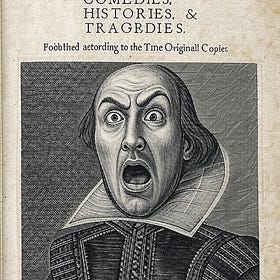
Finally, we now have the full explanation for Jonson’s poem on Shakespeare
All the major events of North’s life and all of his translations link with the chronology and substance of the source plays with a jigsaw-like precision: Using independent evidence, we can firmly establish the date of dozens of early source plays, placing each of these earlier works on a timeline starting in 1556 and extending to 1604. And we can confirm that each play recreates the most significant moments of North’s life and combines them with material from his latest writings, including personal papers. (See, also, Thomas North: The Original Author of Shakespeare’s Plays.)


In other words, North’s plays from a particular period not only reflect what North had just experienced but also what he had just recently translated or written. All of North’s plays follow this same pattern, year after year, decade after decade. The plays overflow with the most important people, stunning visuals, and memorable moments of North’s life during the time he first wrote them—as well as the most remarkable stories and passages he had recently written in his translations or journal. This consilience is astonishing, and disputing it would be like denying the accuracy of every fit in a completed jigsaw puzzle in which all the pieces meet seamlessly and the image matches the picture on the front of the box.
Also, you can read more on the chronology here:

Finally, one must wonder: if everyone agrees that Shakespeare adapted old plays, and we have repeatedly passed peer review exposing evidence that North wrote many of those old plays, then what is the problem?
Well, the problem is, as editors and academics soon found out, we didn’t just have evidence that North wrote a few plays of Shakespeare; we knew he had written essentially all of them. And such a discovery is extremely disruptive. It not only challenges conventional views of Shakespeare and his modus operandi; it also upends a significant amount of previous work on the subject.
Yes, scholars knew that Shakespeare frequently adapted old plays, but they mostly ignore that fact when analyzing them. And no one ever suspected that the same person wrote all of the earlier source-plays and even based them on the most significant events of his life. Thus, the North discovery gives new meaning to the plays and places them in an entirely different political and personal context, thus making many current views on the origin of plays obsolete.

The only difficulty facing the Thomas North view is not an absence of proofs; it is the theory’s rude contradiction of all other views of the true origin of the Shakespeare canon.


